 By Colin Foster
Water damage from a slow leak or burst pipe can cause costly repairs and mold issues. Water leak sensors give you an early warning so you can stop a small drip before it becomes a big problem. This guide covers where to place sensors, the different types available, and how to choose between hub-based and Wi-Fi models, plus automatic shutoff valves and essential maintenance.
Why You Need Water Leak Sensors
A leak sensor is a simple device that detects moisture and sends an alert to your phone or sounds a local siren. Placed in vulnerable areas, it can alert you the moment water appears. Some sensors can also trigger an automatic shutoff valve to stop the water supply entirely. For homeowners and renters alike, these sensors provide peace of mind, especially when you are away from home. They are an affordable way to protect floors, cabinets, and foundations from water damage.
Where to Place Leak Sensors
Leaks start in predictable places. Focus on these high-risk areas in your home:
- Under sinks – Kitchen and bathroom sinks have supply lines and drain connections that can loosen or corrode over time. Place a sensor directly under the sink basin, near the P-trap and shutoff valves.
- Water heater – The tank, pressure relief valve, and inlet/outlet connections are common leak points. Set a sensor on the floor next to the water heater, or on a drip pan if one is installed.
- Washing machine – Supply hoses and drain hoses can burst or disconnect. Place a sensor on the floor behind or beside the machine, close to the hose connections.
- Dishwasher – Leaks often occur under the appliance at the water supply line or drain hose. Slide a sensor under the dishwasher kickplate or on the floor directly in front of the appliance.
- Refrigerator ice maker – The small supply line to the ice maker can develop pinhole leaks. Put a sensor behind the refrigerator on the floor near the water connection.
- Toilets – A wax ring failure or a cracked supply line can leak water onto the bathroom floor. Place a sensor near the base of the toilet, but not directly under the bowl where it may be triggered by condensation.
- Sump pump – A failed sump pump can lead to basement flooding. Position a sensor near the sump pit or at the lowest point of the basement floor.
- HVAC drain line – Condensate drains can clog and overflow, causing water damage near the furnace or air handler. Place a sensor in the drip pan or on the floor under the drain line.
For a complete list of sensor locations and tips, see our detailed leak sensor placement guide.
Types of Leak Sensors
Leak sensors fall into two main categories based on how they detect water: spot sensors and cable sensors. Some models also include freeze alerts.
Spot Sensors
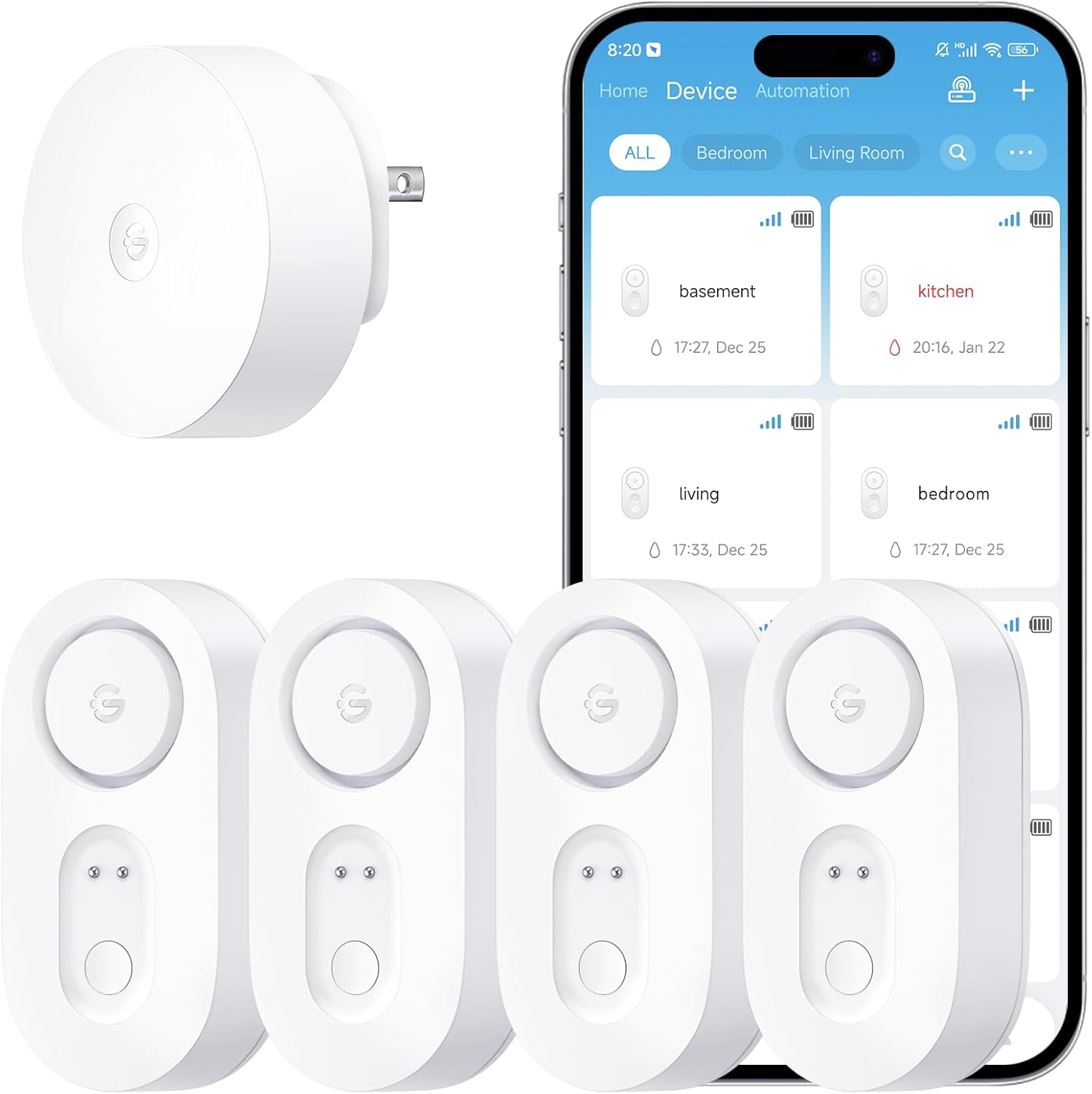
A spot sensor is a small, puck-shaped or rectangular device that sits on a flat surface. It detects water only at the point where it is placed. These sensors are ideal for tight spaces like under sinks, behind appliances, and near water heaters. Most spot sensors have two metal probes or a conductive strip on the bottom. When water bridges the probes, the sensor triggers an alarm. Spot sensors are easy to install—just set them in the target location. They run on batteries and typically last a year or more before replacement is needed. You can find many options among smart sensors that connect to your smart home system.
Cable Sensors
A cable sensor consists of a long, flat cable with two conductors running its length. The cable can detect water anywhere along its path. When moisture touches the cable, the sensor sounds an alert. Cable sensors are useful for covering larger areas, such as along a basement wall, around a sump pit, or behind a row of appliances. They can also be placed in attics or crawl spaces where you want to monitor a wide zone. The cable is connected to a control module that sends alerts. Cable sensors are more expensive than spot sensors but offer broader coverage.
Freeze Alerts
Some leak sensors include a temperature sensor that can alert you when the temperature drops near freezing. This is useful for pipes in unheated basements, garages, or exterior walls where freezing could cause a burst. A freeze alert gives you time to take action, such as opening cabinet doors or letting faucets drip, before the pipe freezes and ruptures. If you live in a cold climate, consider sensors with freeze detection built in.
When shopping for sensors, look for water leak sensors that match your coverage needs. A combination of spot sensors in tight areas and a cable sensor in larger zones often works best.
Hub vs. Wi-Fi Sensors
Leak sensors connect to your smart home in one of two ways: through a hub or directly to your Wi-Fi network. Each approach has trade-offs.
Hub-based sensors use a central hub (often using Zigbee, Z-Wave, or Thread) to communicate. The hub then connects to your home network and sends alerts to your phone. Hub-based sensors are typically more reliable because they use a dedicated mesh network that is less prone to interference from other Wi-Fi devices. They also tend to have longer battery life because they only wake up when needed. However, you need a compatible hub. If you do not already have one, read Do You Need a Smart Home Hub? to decide if it is right for you.
Wi-Fi sensors connect directly to your home Wi-Fi network without a hub. They are easier to set up—just download the app and connect. Wi-Fi sensors are a good choice if you only need a few sensors and do not want to invest in a hub. The downside is that they may have shorter battery life because they need to maintain a constant Wi-Fi connection. They can also be slower to alert if the network is congested. For a single sensor under a sink, a Wi-Fi model may be sufficient. For a whole-home setup with multiple sensors, a hub-based system is often more reliable.
Many modern sensors support Matter, the new smart home standard. Matter devices can work with multiple platforms and hubs. Check the packaging or manufacturer website to confirm Matter compatibility before buying.
Automatic Water Shutoff Valves
An automatic water shutoff valve takes leak detection a step further. When a sensor detects water, it sends a signal to a motorized valve that shuts off the main water supply to your home. This stops the flow of water immediately, preventing extensive damage even if you are not home to hear the alarm.
Shutoff valves come in two main types: whole-house valves that install on the main water line, and point-of-use valves that fit on a single appliance line (such as under a sink or behind a washing machine). Whole-house valves provide comprehensive protection but require professional installation because they involve cutting into the main water pipe and wiring or plumbing the valve. Point-of-use valves are easier to install but only protect one area.
Important: Installing a whole-house automatic shutoff valve involves working with your home’s main water supply. This is a job for a licensed plumber. If you are not comfortable with plumbing or electrical work, hire a professional. Always follow the manufacturer’s instructions and turn off the water supply at the main shutoff before any installation.
Some shutoff valves are designed to work with specific leak sensor systems. Others are standalone and can be triggered by a dry contact or wireless signal from a compatible sensor. When choosing a shutoff valve, verify that it is compatible with your existing sensors or hub.
Testing and Battery Maintenance
A leak sensor is only useful if it works when you need it. Test each sensor regularly—a common recommendation is once a month. To test, simply wet a paper towel and touch it to the sensor’s probes or place a few drops of water on the sensor’s detection area. The sensor should sound its local alarm and send an alert to your phone within a few seconds. If it does not respond, check the batteries and replace them if needed.
Spot sensors run on coin cells, small lithium cells such as CR123A or CR2, or standard AA/AAA batteries, depending on the model. Battery life varies from six months to two years depending on the sensor type and how often it communicates. Wi-Fi sensors tend to drain batteries faster than hub-based ones. Set a reminder on your phone or calendar to check battery levels every few months. Many smart home apps show battery status for each sensor, so you can replace batteries before they die.
If a sensor’s battery is low, the app or a blinking LED on the sensor will usually warn you. Do not ignore low-battery alerts. Replace the battery promptly and test the sensor again. For sensors with non-replaceable batteries, the entire unit must be replaced when the battery dies.
Also inspect the sensor’s physical condition. Dust or debris on the probes can prevent water detection. Wipe the sensor clean with a dry cloth if needed. If you move a sensor to a new location, test it there before relying on it.
Top Picks to Compare
If you would rather start from a short list, these are popular options on Amazon for this search. Check each listing’s details, size and current price before you buy.



FAQ
How many leak sensors do I need?
Start with one sensor for each high-risk area: under every sink, near the water heater, behind the washing machine, and beside the refrigerator. Many homes start with four to six sensors. You can add more as needed.
Can leak sensors work without a hub?
Yes, Wi-Fi sensors connect directly to your home network and do not require a hub. They are easier to set up but may have shorter battery life. Hub-based sensors offer better reliability and longer battery life but require a compatible hub.
Do leak sensors detect slow drips?
Yes, most spot sensors can detect a small amount of water. They are designed to trigger when moisture bridges the probes, which can happen from a slow drip. However, very tiny condensation or humidity may not trigger them. Place sensors where water is likely to pool.
What should I do if a sensor alerts while I am away?
If you have an automatic shutoff valve, it will stop the water supply. If not, you should contact a neighbor or a plumber to check the leak. Some smart systems allow you to remotely shut off the water if you have a compatible valve. Otherwise, you may need to return home to address the leak.
Water leak sensors are a small investment that can save you costly water damage repairs. By placing them in the right spots, choosing the right type for your home, and keeping them tested and powered, you can catch leaks early and protect your property. Whether you opt for a simple spot sensor under the sink or a full system with an automatic shutoff valve, the key is to take action before water has a chance to spread.
About Colin Foster
Colin Foster is part of our editorial team and reviews and edits our smart home guides, checking product details against manufacturer specifications and owner feedback.