 By Claire Whitaker
Updated November 2026
Electric baseboard heaters are common in apartments, older homes and additions, but they are also hard to control well. Most run on 240-volt circuits, cycle on and off without much finesse, and come with a basic wall dial that gives little insight into how much energy you are using. A mysa smart thermostat for electric baseboard heating solves that problem by adding Wi-Fi scheduling, app control and, in most cases, energy reporting to each heater or room. This guide compares five Mysa-family and compatible options, judged on electrical compatibility with baseboard heaters, scheduling depth, wiring requirements, and how well each one plays with Alexa, Google Home and Apple HomeKit.
Our top picks at a glance
- 1
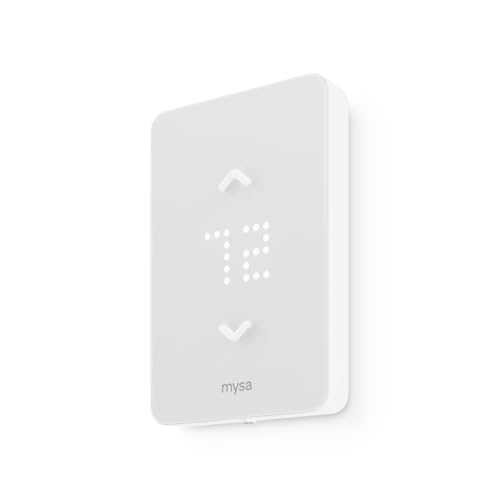 TOP CHOICEBest overallMysa Smart Thermostat LITE for Electric Baseboard Heaters | Save Up toView on Amazon
- 2
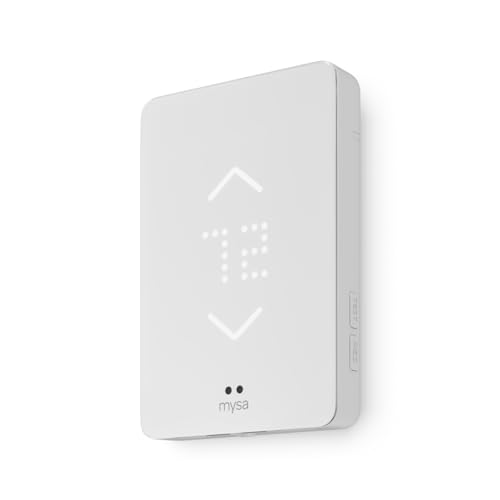 TOP CHOICEBest for in-floor heating crossoverMysa Smart Thermostat for Electric in-Floor Heating | Save on HeatingView on Amazon
- 3
 TOP CHOICEBest for in-wall heater mix-upsmeross Smart Thermostat for Electric Baseboard and in-Wall Heaters WorView on Amazon
- 4
 Best for heating and cooling homesNEW Mysa Smart Thermostat for Heating & Cooling | Programmable WiFi ThView on Amazon
- 5
 Best budget pickHoneywell Home 5-2 Day Programmable Thermostat Electric Baseboard HeatView on Amazon
Our Top Picks
Quick Comparison
| Product | Best for | Key feature |
|---|---|---|
| Mysa Smart Thermostat LITE for Electric Baseboard Heaters | Most electric baseboard setups | Purpose-built for baseboard heaters with 7-day scheduling |
| Mysa Smart Thermostat for Electric in-Floor Heating | Rooms with mixed floor and baseboard heat | Floor sensor and built-in Class A GFCI |
| meross Smart Thermostat for Electric Baseboard and in-Wall Heaters | Owners comparing third-party options | Works with HomeKit, Alexa and Google Home |
| NEW Mysa Smart Thermostat for Heating & Cooling | Homes with both heat and cooling | Geofencing and vacation mode |
| Honeywell Home 5-2 Day Programmable Thermostat | Basic scheduling without a smart hub | Simple 5-2 day programming for baseboard heaters |
Mysa Smart Thermostat LITE for Electric Baseboard Heaters | Save Up to 26% on Heating | WiFi Programmable | 7-Day Scheduling | HomeKit, Alexa, Google | 120V-240V
Mysa Smart Thermostat LITE for Electric Baseboard Heaters | Save Up to 26% on Heating | WiFi Programmable | 7-Day Scheduling | HomeKit, Alexa, Google | 120V-240V
Mysa Smart Thermostat LITE for Electric Baseboard Heaters
Best for: Most electric baseboard setups where you want Wi-Fi control and scheduling without extra features.
This model suits renters and homeowners with one or several 120V–240V baseboard heaters who want app control and schedules, and who do not need a floor sensor or cooling support.
Key specs
- Designed for electric baseboard heaters
- Voltage range listed as 120V–240V
- Wi-Fi programmable with 7-day scheduling
- Works with Apple HomeKit, Amazon Alexa and Google Home
Pros
- Purpose-built for baseboard heaters, so the product matches the most common setup
- 7-day scheduling covers weekday and weekend routines
- Broad voice assistant and HomeKit support
Cons
- No cooling control, so it will not help in homes with central air
- Owners with complex multi-zone layouts may need several units
Bottom line: The safest starting point for most people with electric baseboard heat who want smart control with few extras.
View on Amazon
Mysa Smart Thermostat for Electric in-Floor Heating | Save on Heating Costs | Built-in Class A GFCI | Include Floor Sensor | WiFi Programmable | HomeKit, Alexa, Google | 120V-240V
Mysa Smart Thermostat for Electric in-Floor Heating | Save on Heating Costs | Built-in Class A GFCI | Include Floor Sensor | WiFi Programmable | HomeKit, Alexa, Google | 120V-240V
Mysa Smart Thermostat for Electric in-Floor Heating
Best for: Rooms that combine floor heating with baseboard or other electric heat sources.
This variant fits bathrooms and kitchens where in-floor cable or mat heating is present, and where you want floor temperature limits and a built-in ground-fault protection feature.
Key specs
- Designed for electric in-floor heating systems
- Includes a floor sensor
- Built-in Class A GFCI protection
- Voltage range listed as 120V–240V
Pros
- Floor sensor helps prevent overheating of finished floors
- Built-in GFCI adds a layer of protection in wet areas
- Same app and voice assistant support as the baseboard model
Cons
- Overkill if you only have baseboard heaters
- Floor sensor placement requires care to read accurately
Bottom line: Choose this if your room has in-floor heat or a mix of heat sources and you want floor-temperature control.
View on Amazon
meross Smart Thermostat for Electric Baseboard and in-Wall Heaters Work with HomeKit, Alexa and Google Home, 120V-240V Wi-Fi Programmable Thermostat with Easy Install, Energy Saving, 4 Wires Needed
meross Smart Thermostat for Electric Baseboard and in-Wall Heaters Work with HomeKit, Alexa and Google Home, 120V-240V Wi-Fi Programmable Thermostat with Easy Install, Energy Saving, 4 Wires Needed
meross Smart Thermostat for Electric Baseboard and in-Wall Heaters
Best for: Owners who want a third-party alternative that supports HomeKit, Alexa and Google Home.
This option suits people comparing brands or who already run a Meross ecosystem and want a thermostat for baseboard and in-wall heaters at 120V–240V.
Key specs
- Designed for electric baseboard and in-wall heaters
- Wi-Fi programmable with energy-saving features
- Works with HomeKit, Alexa and Google Home
- Listing notes 4 wires needed
Pros
- Covers baseboard and in-wall heaters with one model family
- Wide voice assistant compatibility
- Listing highlights easy installation
Cons
- The four-wire requirement can complicate installs in older wiring
- Owners often report that app experience differs from Mysa’s
Bottom line: A solid alternative if you are comparing brands or already use Meross devices, but confirm wiring first.
View on Amazon
NEW Mysa Smart Thermostat for Heating & Cooling | Programmable WiFi Thermostat | Energy Star Certified | 7-Day Scheduling | Geofencing | Vacation Mode
NEW Mysa Smart Thermostat for Heating & Cooling | Programmable WiFi Thermostat | Energy Star Certified | 7-Day Scheduling | Geofencing | Vacation Mode
NEW Mysa Smart Thermostat for Heating & Cooling
Best for: Homes that need both heating and cooling control from one smart thermostat.
This model fits households with a mix of heat sources and an air conditioner, where you want geofencing and vacation mode alongside scheduling.
Key specs
- Programmable Wi-Fi thermostat for heating and cooling
- Energy Star certified, as stated in the listing
- 7-day scheduling
- Geofencing and vacation mode
Pros
- Handles heating and cooling in one device
- Geofencing lets the system adjust when you leave or return
- Vacation mode simplifies travel settings
Cons
- Heating-and-cooling wiring may not match every baseboard-only setup
- More features than many baseboard-only homes need
Bottom line: The right pick for mixed systems with cooling; confirm your wiring matches the listed system type before buying.
View on Amazon
Honeywell Home 5-2 Day Programmable Thermostat Electric Baseboard Heaters | RLV4305A1000
Honeywell Home 5-2 Day Programmable Thermostat Electric Baseboard Heaters | RLV4305A1000
Honeywell Home 5-2 Day Programmable Thermostat Electric Baseboard Heaters
Best for: Simple scheduling on baseboard heaters without a smart hub or app.
This is a non-Wi-Fi programmable thermostat for electric baseboard heaters, suited to people who want to set a weekday and weekend schedule and skip app-based control.
Key specs
- Designed for electric baseboard heaters
- 5-2 day programmable schedule
- Part number RLV4305A1000 as listed
Pros
- Straightforward programming with no account setup
- Works without Wi-Fi or a smart speaker
- Brand has long experience with baseboard controls
Cons
- No remote app, geofencing or voice control
- No energy reports to compare usage over time
Bottom line: Best for people who want a reliable schedule-only control and do not need smart home integration.
View on AmazonBuying Guide
Confirm your heater voltage and load
Most baseboard heaters run on 240 volts, though some are 120 volts. Check the nameplate on each heater, and confirm the thermostat’s rated range covers it. Also check the amperage: the thermostat must handle the total load of the heater or heaters it controls, and the manufacturer’s specifications are the authority here.
Good picks for this: Mysa Smart Thermostat LITE for Electric Baseboard Heaters, meross Smart Thermostat for Electric Baseboard and in-Wall Heaters
Check whether you have a neutral or C-wire
Smart thermostats need steady power. Some baseboard models are powered directly from the heater line, while others need a neutral. Many listings specify wire counts, and the meross listing notes that four wires are needed. If your wiring does not match, you may need a different model or an installer. For a deeper look at this, see Smart Thermostat Compatibility: C-Wires and HVAC Systems.
Good picks for this: Mysa Smart Thermostat LITE for Electric Baseboard Heaters, Honeywell Home 5-2 Day Programmable Thermostat Electric Baseboard Heaters
Scheduling depth
Look for at least a 5-2 day or 7-day schedule so each day can have its own setpoints. Owners often report that finer control makes a noticeable difference in comfort and in how often the heaters cycle. Scheduling is also the foundation of most energy-saving routines; see Smart Thermostats: Learning vs Scheduling, Remote Sensors and Savings Claims for how schedules compare to learning features.
Good picks for this: Mysa Smart Thermostat LITE for Electric Baseboard Heaters, Honeywell Home 5-2 Day Programmable Thermostat Electric Baseboard Heaters
Voice assistant and smart home support
If you already use Alexa, Google Home or Apple HomeKit, match the thermostat to that ecosystem. Several models here list all three. Check the compatibility list before buying, because support can differ by model. For a broader view of how the ecosystems compare, see What Devices Does Alexa Work With? Compatible Smart Home List (2026).
Good picks for this: meross Smart Thermostat for Electric Baseboard and in-Wall Heaters, Mysa Smart Thermostat LITE for Electric Baseboard Heaters
Floor sensors and special heating types
If your room has in-floor cable or mat heat, a floor sensor lets the thermostat limit floor temperature. This matters for finished floors and for bathrooms. Built-in ground-fault protection is also worth noting in wet areas, but confirm the requirements for your location with a licensed electrician.
Good picks for this: Mysa Smart Thermostat for Electric in-Floor Heating
Heating and cooling
If your home has central air or a heat pump, a heating-and-cooling model may be needed. Baseboard-only thermostats will not control cooling. Confirm your system type matches the listing before purchase.
Good picks for this: NEW Mysa Smart Thermostat for Heating & Cooling
Wi-Fi network and placement
Wi-Fi thermostats need a stable connection at the wall where they are mounted. Many smart home problems trace back to weak signal. Our guide to Why Smart Devices Need 2.4 GHz Wi-Fi (and How to Connect Them) explains why most of these devices connect on the 2.4 GHz band.
Good picks for this: Mysa Smart Thermostat LITE for Electric Baseboard Heaters, meross Smart Thermostat for Electric Baseboard and in-Wall Heaters
FAQ
Can a smart thermostat control electric baseboard heaters?
Yes, but only if the thermostat is rated for baseboard heaters and the voltage and amperage match your heaters. Models designed for baseboard heat, such as the Mysa LITE listing, are built for this use.
Do I need a neutral wire?
It depends on the model. Some thermostats draw power from the heater line, while others need a neutral. Check the wire requirements in the listing and inspect your wall box before buying.
Will a smart thermostat lower my electric bill?
Scheduling and setback can reduce heating runtime, and savings depend on your home, climate and habits. Manufacturers often state potential savings, but results vary. For an honest look at savings claims, read How to Lower Your Electric Bill with Smart Home Devices.
Can I use Alexa, Google or HomeKit?
Several models here list support for all three. Confirm the specific model’s support before you buy, because integration details can change.
Is professional installation needed?
Electric heating work involves line voltage. If you are not comfortable working with 120V or 240V wiring, or if the wiring does not match the listing, consult a licensed electrician. Turn off the breaker and verify power is off before touching any wires.
Does a smart thermostat need a hub?
Wi-Fi models connect directly to your network, while the Honeywell baseboard thermostat in this list works without Wi-Fi. Check whether your ecosystem needs a separate hub before you buy.
Conclusion
For most electric baseboard setups, the Mysa Smart Thermostat LITE for Electric Baseboard Heaters is the most direct match. Choose the in-floor Mysa model if your room has floor heat, the meross option if you want a third-party alternative, and the Mysa heating-and-cooling model if your home also has air conditioning. The Honeywell programmable thermostat suits people who want a simple schedule without smart features. Always verify voltage, wiring and compatibility before buying.
Sources
- Guidance on programmable thermostats and home heating efficiency (energy.gov)
- Electrical and heating product safety recalls and advice (cpsc.gov)
- Electrical safety standards and home heating fire prevention (nfpa.org)
About Claire Whitaker
Claire Whitaker is part of our editorial team and reviews and edits our smart home guides, checking product details against manufacturer specifications and owner feedback.