 By Claire Whitaker
Updated November 2026
If your home runs on electric baseboard heat, a smart thermostat for baseboard heat can give you per-room scheduling, remote control from your phone, and the ability to trim wasted heating hours. Baseboard heaters are a different animal from forced-air furnaces, though. They run on line voltage, usually 120V or 240V, and they switch the heat directly rather than sending a low-voltage signal to a furnace. That means you need a thermostat rated for that load. This guide covers three models we selected based on specifications, brand reputation, and patterns in owner feedback, with a focus on what matters most for baseboard systems.
Our top picks at a glance
- 1
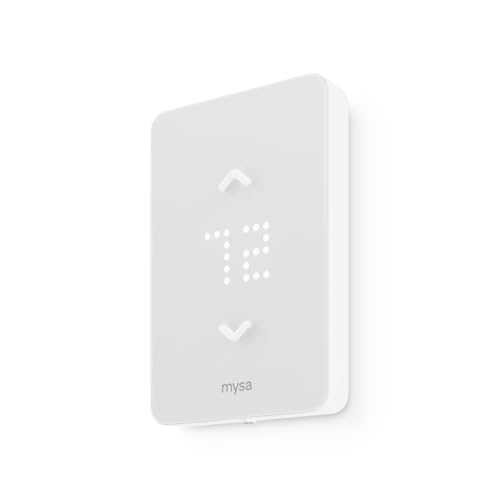 TOP CHOICEBest overallMysa Smart Thermostat LITE for Electric Baseboard HeatersView on Amazon
- 2
 Best for wiring flexibilitymeross Smart Thermostat for Electric Baseboard and in-Wall HeatersView on Amazon
- 3
 Best budget pickHoneywell Home 5-2 Day Programmable Thermostat (RLV4305A1000)View on Amazon
Our Top Picks
Our selection method weighted four things: whether the device is rated for line-voltage baseboard heaters, how many wires it requires, whether it offers scheduling and Wi-Fi control, and whether it works with the major voice assistants. Brand support reputation and common owner complaints (such as app connectivity drops or confusing installation) also factored in. We did not test these products ourselves; the comparison is based on published specifications and owner-reported patterns.
Quick Comparison
| Product | Best for | Key feature |
|---|---|---|
| Mysa Smart Thermostat LITE for Electric Baseboard Heaters | Most baseboard owners who want a modern app and energy reporting | Built for 120V–240V baseboard heaters with Wi-Fi scheduling |
| meross Smart Thermostat for Electric Baseboard and in-Wall Heaters | Owners with 4-wire setups who want Alexa, Google or HomeKit support | Works with HomeKit, Alexa and Google Home |
| Honeywell Home 5-2 Day Programmable Thermostat (RLV4305A1000) | Households that want a simple, non-Wi-Fi programmable unit | 5-2 day programming for electric baseboard heaters |
Mysa Smart Thermostat LITE for Electric Baseboard Heaters
Mysa Smart Thermostat LITE for Electric Baseboard Heaters | Save Up to 26% on Heating | WiFi Programmable | 7-Day Scheduling | HomeKit, Alexa, Google | 120V-240V If you want more background, see Smart Thermostats: How They Save Energy.
Best for: Overall control and app-based scheduling for baseboard heat
This model is aimed at homeowners who want a dedicated smart thermostat for baseboard heat with a polished app, Wi-Fi scheduling, and support for the big three voice ecosystems. It suits single-room control in bedrooms or offices as well as whole-home setups with multiple units.
Key specs
- Designed for 120V–240V electric baseboard heaters
- Wi-Fi programmable with 7-day scheduling
- Compatible with HomeKit, Alexa and Google
Pros
- Built specifically for baseboard heaters rather than adapted from furnace controls
- Scheduling and remote control are available from a phone app
- Works with HomeKit, Alexa and Google, which suits mixed ecosystems
Cons
- Requires a stable Wi-Fi connection for full remote functionality
- Installation involves line-voltage wiring, so a licensed electrician may be needed for some homes
Bottom line: The best starting point for most baseboard owners who want a modern app and reliable Wi-Fi control.
View on Amazonmeross Smart Thermostat for Electric Baseboard and in-Wall Heaters
meross Smart Thermostat for Electric Baseboard and in-Wall Heaters Work with HomeKit, Alexa and Google Home, 120V-240V Wi-Fi Programmable Thermostat with Easy Install, Energy Saving, 4 Wires Needed
Best for: Wiring flexibility and voice assistant integration
This model fits households with electric heaters that include in-wall units as well as baseboard, and that want strong smart home integration with Alexa, Google Home, or Apple HomeKit. Its listing specifies that four wires are needed, which makes it a good match for homes where the wiring is already in place.
Key specs
- Rated for 120V–240V electric baseboard and in-wall heaters
- Wi-Fi programmable
- Works with HomeKit, Alexa and Google Home
- Listing notes 4 wires are needed
Pros
- Compatible with three major voice and home platforms
- Covers both baseboard and in-wall electric heaters
- Listing highlights easy installation and energy-saving scheduling
Cons
- The 4-wire requirement can rule it out in older homes without a neutral or extra conductor
- Owners often recommend checking the app setup carefully before relying on automations
Bottom line: A strong choice if your wiring supports four conductors and you want to control heat with your voice across multiple platforms.
View on AmazonHoneywell Home 5-2 Day Programmable Thermostat (RLV4305A1000)
Honeywell Home 5-2 Day Programmable Thermostat Electric Baseboard Heaters | RLV4305A1000
Best for: A simple, budget-friendly programmable option for baseboard heat
This is a non-Wi-Fi programmable thermostat for electric baseboard heaters. It suits owners who want scheduled temperature setbacks without a subscription, an app, or a network connection, and who do not need remote control.
Key specs
- Programmable with 5-2 day scheduling (weekdays and weekends)
- Designed for electric baseboard heaters
Pros
- Straightforward programming with separate weekday and weekend schedules
- No dependence on Wi-Fi, so it works during internet outages
- A budget pick for basic scheduling
Cons
- No remote app control or voice assistant integration
- Owners often find the programming interface less intuitive than newer touchscreen designs
Bottom line: The right pick if you mainly want scheduled setbacks and do not need a smart thermostat in the connected sense.
View on AmazonBuying Guide
Confirm your heater is line voltage
Electric baseboard heaters typically run on 120V or 240V. Check the nameplate on the heater or the breaker labeling before buying. Thermostats designed for low-voltage furnace systems will not work safely on these circuits. Confirm the rating matches your heater’s voltage and amperage.
Good picks for this: Mysa Smart Thermostat LITE for Electric Baseboard Heaters, meross Smart Thermostat for Electric Baseboard and in-Wall Heaters
Count your wires
Many line-voltage smart thermostats need a neutral or a fourth conductor to power the Wi-Fi electronics. Some older homes have only two conductors to each heater. Open the existing wall box and count the wires before purchasing. If you have only two, look for a model designed to work without the extra wire or plan for an upgrade.
Good picks for this: meross Smart Thermostat for Electric Baseboard and in-Wall Heaters, Mysa Smart Thermostat LITE for Electric Baseboard Heaters
Check ecosystem compatibility
If your household uses Alexa, Google Home, or Apple HomeKit, confirm the thermostat supports your platform before buying. Support for these platforms varies by model. Consider which devices you already own and which voice commands you want to use.
Good picks for this: meross Smart Thermostat for Electric Baseboard and in-Wall Heaters, Mysa Smart Thermostat LITE for Electric Baseboard Heaters
Decide between scheduling and learning
Basic programmable thermostats follow a fixed schedule you set. Smart models add app control and sometimes adaptive features. Scheduling is the most useful feature for most baseboard owners, since heaters can be set down during sleep or work hours. Think about whether you want to adjust settings from your phone or prefer a set-and-forget unit.
Good picks for this: Honeywell Home 5-2 Day Programmable Thermostat, Mysa Smart Thermostat LITE for Electric Baseboard Heaters
Consider Wi-Fi reliability
Wi-Fi thermostats depend on a stable home network. Owners often report occasional disconnects when the thermostat sits far from the router, so check the signal strength at the wall location. Most manufacturers recommend 2.4 GHz connectivity for smart home devices. A non-Wi-Fi unit avoids this issue entirely, though it sacrifices remote control.
Good picks for this: Honeywell Home 5-2 Day Programmable Thermostat, Mysa Smart Thermostat LITE for Electric Baseboard Heaters
Plan for installation
Line-voltage work involves live circuits. Turn off the breaker, verify power is off with a tester, and follow the manufacturer’s wiring diagram exactly. If you are not comfortable with line-voltage electrical work, hire a licensed electrician. Local codes may require a permit for replacing thermostats on dedicated heater circuits.
Good picks for this: Honeywell Home 5-2 Day Programmable Thermostat, meross Smart Thermostat for Electric Baseboard and in-Wall Heaters
Match the thermostat to your room layout
Baseboard systems are usually zoned by room, so each heater may need its own thermostat. If you plan to control several rooms, consider how many units you need and whether a consistent app and ecosystem across all of them will simplify management.
Good picks for this: Mysa Smart Thermostat LITE for Electric Baseboard Heaters, meross Smart Thermostat for Electric Baseboard and in-Wall Heaters
FAQ
Can I use a regular smart thermostat on baseboard heaters?
Usually not. Most smart thermostats are designed for low-voltage furnace or heat pump systems. Baseboard heaters run on line voltage, so you need a thermostat specifically rated for 120V or 240V electric heating. Check the product specifications before buying.
Do I need a neutral wire for a smart thermostat for baseboard heat?
Many Wi-Fi models require a neutral or an additional conductor to power their electronics. Requirements differ by model. Open the wall box and count conductors, then compare that against the product listing.
Will a smart thermostat save energy on electric baseboard heat?
Scheduling can reduce heating during unoccupied hours, which is where most savings come from. Actual results depend on your home, climate, insulation, and habits. Manufacturers often publish savings figures, but these vary, so treat them as estimates.
Can I control baseboard heat with Alexa or Google Home?
Some models support Alexa, Google Home, or Apple HomeKit, while others do not. Confirm voice assistant support on the product page before purchase. Models without Wi-Fi cannot be controlled by voice assistants.
Is professional installation necessary?
For line-voltage work, many homeowners choose a licensed electrician, especially when wiring is unfamiliar or a permit is required. Improper wiring can create fire or shock hazards. If you are unsure, consult a qualified electrician.
Do I need one thermostat per heater?
Often yes. Each baseboard heater is commonly controlled separately, although some installations use a single thermostat for multiple heaters on one circuit. Check your existing wiring layout and the product’s load rating.
Do smart thermostats for baseboard heat work during internet outages?
Wi-Fi models usually keep their last programmed schedule during a network outage, but remote control and app changes will be unavailable until the connection returns. Non-Wi-Fi programmable models continue operating normally.
Conclusion
For most baseboard owners, the Mysa Smart Thermostat LITE for Electric Baseboard Heaters is the most complete choice, offering a dedicated design for line-voltage heaters and solid app-based scheduling. If your wiring supports four conductors and you want to control heat through Alexa, Google Home, or HomeKit, the meross Smart Thermostat for Electric Baseboard and in-Wall Heaters is a strong fit. If you only need basic programmable scheduling and prefer no Wi-Fi, the Honeywell Home 5-2 Day Programmable Thermostat is the straightforward option. Confirm voltage, wire count, and ecosystem support before buying, and consult a licensed electrician when wiring is uncertain.
Sources
- Guidance on programmable and smart thermostat use and how scheduling affects home heating energy (energy.gov)
- Electrical safety guidance relevant to line-voltage heating circuits and wiring work (nfpa.org)
- Consumer safety information on electric space heaters and related product hazards (cpsc.gov)
Related reading
- Smart Thermostats: Learning vs Scheduling, Remote Sensors and Savings Claims
- Smart Thermostat Compatibility: C-Wires and HVAC Systems
- Sensi Touch 2 Smart Thermostat: 5 Best Models Compared (2026)
- How to Install a Smart Thermostat (and Check Compatibility First)
- Ecobee Smart Thermostat Essential: Setup, Wiring and Compatibility Steps
About Claire Whitaker
Claire Whitaker is part of our editorial team and reviews and edits our smart home guides, checking product details against manufacturer specifications and owner feedback.