 By Claire Whitaker
Updated November 2026
If your smart thermostat keeps warning about low power or refuses to install because the C wire is missing, a c-wire adapter for smart thermostat setup is often the simplest fix. This guide compares four adapters we selected using specification review, brand reputation and common owner feedback patterns. Our selection criteria were thermostat and HVAC compatibility, clarity of the wiring instructions, build quality of the insulation and terminal connections, and whether the product targets a specific thermostat or a general installation.
Our top picks at a glance
- 1
 TOP CHOICEBest overallHoneywell Home C-Wire Adapter | CWIREADPTR8001/NView on Amazon
- 2
 Best for Google Nest ownersGoogle Nest Power Connector – C Wire Adapter for Smart Thermostats – 3View on Amazon
- 3
 Best for professional installersReinforced THP9045A2098/U C-Wire Adapter for Smart ThermostatView on Amazon
- 4
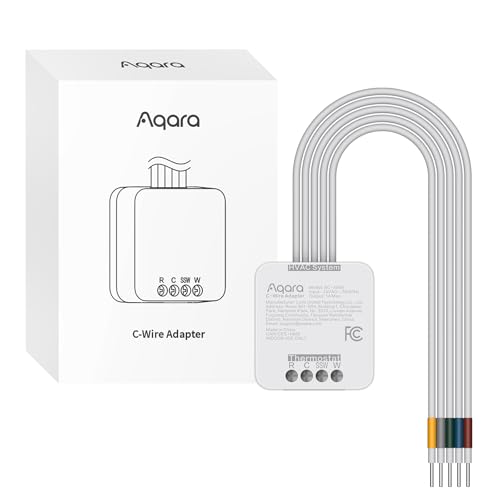 Best for Aqara W200 installsAqara C-Wire Adapter for W200 Smart Thermostat, for Compatible HVAC SystemsView on Amazon
Our Top Picks
Quick Comparison
| Product | Best for | Key feature |
|---|---|---|
| Honeywell Home C-Wire Adapter | CWIREADPTR8001/N | General smart thermostat installs | Broad thermostat compatibility from a major thermostat brand |
| Google Nest Power Connector – C Wire Adapter for Smart Thermostats | Google Nest thermostat owners | Designed for Nest power connection and a compact accessory form |
| Reinforced THP9045A2098/U C-Wire Adapter for Smart Thermostat | Installers and confident DIY wiring work | Flame-retardant insulated plastic housing |
| Aqara C-Wire Adapter for W200 Smart Thermostat | Aqara W200 thermostat installs | Model-specific power adapter with an HVAC compatibility check |
Honeywell Home C-Wire Adapter | CWIREADPTR8001/N
Honeywell Home C-Wire Adapter | CWIREADPTR8001/N
Best for: General smart thermostat installs with no C wire at the thermostat base
This is a good starting point for homeowners whose thermostat is missing a C wire and who want an adapter from a well-known thermostat manufacturer. It fits systems where the thermostat base has no spare conductor, and it is designed to pull power from the HVAC system rather than requiring a new cable run.
Key specs
- Model: CWIREADPTR8001/N
- Function: adds a common (C) wire power path for compatible thermostats
Pros
- Recognized brand with broad thermostat family support
- Straightforward concept: it replaces the need to pull a new wire
- Works well as a first option when you are unsure which adapter type you need
Cons
- Compatibility still depends on your specific HVAC wiring, so check before buying
- Owners sometimes report that wiring labels on older systems are unclear, which can slow installation
Bottom line: A sensible default pick for most homeowners who need a general-purpose c-wire adapter and want a recognizable manufacturer behind it.
View on AmazonGoogle Nest Power Connector – C Wire Adapter for Smart Thermostats – 3.98in Accessory, Snow
Google Nest Power Connector – C Wire Adapter for Smart Thermostats – 3.98in Accessory, Snow
Best for: Google Nest thermostat owners who need a power connection without rewiring
This adapter is aimed at people who already use or plan to use a Google Nest thermostat and need a dedicated power connector. Its listing name specifies a 3.98-inch size and a snow color, which suits installers who want a matching accessory.
Key specs
- Listed length: 3.98 inches
- Listed color: snow
- Purpose: C wire power connector for smart thermostats
Pros
- Built around a major smart thermostat ecosystem
- Compact form factor for tight thermostat bases
- Clear purpose tied to a single product family
Cons
- Best suited to Nest hardware, so less useful if you plan to switch brands
- Still requires confirming that your HVAC system supplies a usable power source
Bottom line: The natural choice for Google Nest owners who want an accessory designed for their thermostat.
View on AmazonReinforced THP9045A2098/U C-Wire Adapter for Smart Thermostat
Reinforced THP9045A2098/U C-Wire Adapter for Smart Thermostat | Flame retardant insulated plastic, fixes missing C wire for home heating systems, ideal for pros and DIY wiring work
Best for: Installers and experienced DIYers who want a reinforced, insulated adapter
This product is positioned for people comfortable working inside a low-voltage control panel. Its listing emphasizes flame-retardant insulated plastic, which appeals to buyers who prioritize insulation quality when splicing into existing thermostat wiring.
Key specs
- Housing: flame-retardant insulated plastic (per listing)
- Purpose: fixes missing C wire for home heating systems
Pros
- Insulated housing supports safer handling of connections
- Suitable for professional and DIY wiring work alike
- Targets the specific problem of a missing C wire
Cons
- Requires comfort with low-voltage wiring, so it is less beginner-friendly
- Installers should confirm the wire gauge and terminal fit match their system
Bottom line: Best for people who are comfortable with HVAC wiring and want reinforced insulation.
View on AmazonAqara C-Wire Adapter for W200 Smart Thermostat, for Compatible HVAC Systems
Aqara C-Wire Adapter for W200 Smart Thermostat, for Compatible HVAC Systems | C-Wire Power for Compatible W200 Installations, Check HVAC Compatibility Before Setup
Best for: Aqara W200 thermostat installs on compatible HVAC systems
This adapter is made for the Aqara W200 thermostat and is intended for compatible HVAC systems. Because compatibility is tied to a specific thermostat model, it suits buyers who have already chosen the W200 and need a power solution for it.
Key specs
- Designed for: Aqara W200 smart thermostat
- Purpose: C wire power for compatible HVAC installations
Pros
- Model-specific design reduces guesswork for W200 owners
- Clear compatibility guidance printed in the listing name
- Addresses the missing C wire problem without new cabling
Cons
- Only useful if you own or plan to buy the Aqara W200
- Compatibility depends on your HVAC system, so verify before installation
Bottom line: The right pick if your smart thermostat is the Aqara W200 and you want a matched adapter.
View on AmazonBuying Guide
Confirm your thermostat and HVAC compatibility
Before buying any c-wire adapter, identify the thermostat you plan to install and check which wires your HVAC system uses. Many smart thermostats require a common wire for continuous power, and some systems cannot supply it through a simple adapter. The Smart Thermostat Compatibility: C-Wires and HVAC Systems article walks through how to match wire terminals to system types.
Good picks for this: Honeywell Home C-Wire Adapter | CWIREADPTR8001/N, Aqara C-Wire Adapter for W200 Smart Thermostat
Match the adapter to your thermostat brand
Brand-specific adapters are designed around one thermostat’s power requirements, which can simplify installation. Universal-style adapters cover more systems but may need more careful wiring. If you already own a Google Nest thermostat, a Nest-branded connector reduces the number of compatibility questions you need to answer.
Good picks for this: Google Nest Power Connector – C Wire Adapter for Smart Thermostats, Aqara C-Wire Adapter for W200 Smart Thermostat
Check the physical fit and wire terminals
Measure the space behind your thermostat plate before ordering. Adapters are often compact, but some have bulkier housings that may not sit flush. Confirm the terminal labels on your existing thermostat base so you know which wire goes where. A small, insulated housing helps prevent accidental shorts in a crowded wall box.
Good picks for this: Google Nest Power Connector – C Wire Adapter for Smart Thermostats, Reinforced THP9045A2098/U C-Wire Adapter for Smart Thermostat
Look for insulation and flame-retardant materials
Because adapters sit inside a live low-voltage control panel, insulation quality matters. Look for listings that specify flame-retardant or insulated housings. Insulated plastic is a common choice for this type of accessory. Even so, follow your manufacturer’s wiring instructions and turn off power at the breaker before making any connection.
Good picks for this: Reinforced THP9045A2098/U C-Wire Adapter for Smart Thermostat, Honeywell Home C-Wire Adapter | CWIREADPTR8001/N
Consider your skill level and installation method
Some adapters are simple enough for a confident DIYer, while others assume familiarity with HVAC wiring. If you are uncomfortable working with the furnace control board or low-voltage wiring, a licensed HVAC technician can install the adapter for you. Consult a qualified professional if you are unsure about any step.
Good picks for this: Reinforced THP9045A2098/U C-Wire Adapter for Smart Thermostat, Aqara C-Wire Adapter for W200 Smart Thermostat
Plan for power draw and system limits
Smart thermostats need steady power, and the adapter must work with your HVAC system’s available transformer output. Some systems have limited spare capacity, which can cause the thermostat to reboot or lose its Wi-Fi connection. If your system has had repeated power issues, review the Smart Thermostats: Learning vs Scheduling, Remote Sensors and Savings Claims article for setup considerations, and consider a professional assessment of your transformer.
Good picks for this: Honeywell Home C-Wire Adapter | CWIREADPTR8001/N, Aqara C-Wire Adapter for W200 Smart Thermostat
Plan for alternatives if no adapter works
In some homes, an adapter will not solve the power problem. In that case, a thermostat designed to run without a C wire may be the better route. The 7 Best No C-Wire Smart Thermostats for Homes Without a C-Wire (2026) article covers options that use other power methods. Installing a new C wire, where practical, is another option.
Good picks for this: Honeywell Home C-Wire Adapter | CWIREADPTR8001/N
FAQ
What is a c-wire adapter for smart thermostat use?
A c-wire adapter provides a continuous power path for a smart thermostat when the thermostat base lacks a dedicated common (C) wire. It typically connects to existing HVAC wires so the thermostat can stay powered without a new cable run.
Do all smart thermostats need a C wire?
Many do, because they need constant power for Wi-Fi and display functions. Some models are designed to work without a C wire, so check the manufacturer’s compatibility list before buying an adapter.
Can I install a c-wire adapter myself?
Some homeowners do, but the work involves low-voltage HVAC wiring. Turn off power at the breaker, label the wires before disconnecting them, and follow the manufacturer’s instructions. If you are unsure, hire a licensed HVAC professional.
How do I know if my HVAC system is compatible?
Check the wires connected to your current thermostat and compare them with your thermostat’s manufacturer documentation. Compatibility often depends on whether your system has a transformer and which terminals are in use. A technician can confirm this during a visit.
Will a c-wire adapter damage my HVAC system?
A properly installed adapter designed for your thermostat should not damage the system, but incorrect wiring can cause problems. Always verify compatibility first and consult a professional if you see signs of electrical trouble, such as burning smells or frequent breaker trips.
Why does my smart thermostat keep rebooting?
Repeated reboots can indicate insufficient power, which sometimes happens when a C wire is missing or the transformer is undersized. An adapter may help, but persistent problems should be checked by an HVAC technician.
Is a Nest-specific adapter better than a universal one?
A brand-specific adapter can reduce compatibility guesswork if you own that thermostat. A broader adapter may suit homes with other thermostat brands or future upgrades. Neither is automatically better; it depends on your equipment and your installation comfort.
Conclusion
For most homeowners missing a C wire, the Honeywell Home C-Wire Adapter | CWIREADPTR8001/N is a reasonable starting point because of its recognized manufacturer. Google Nest owners will likely prefer the Google Nest Power Connector for its purpose-built fit. Installers and experienced DIYers who value insulation may lean toward the Reinforced THP9045A2098/U C-Wire Adapter for Smart Thermostat, while Aqara W200 owners should consider the Aqara C-Wire Adapter for W200 Smart Thermostat. In every case, confirm compatibility with your HVAC system and consult a licensed professional when wiring is unclear.
Sources
- Guidance on home heating systems, thermostat use and energy-efficient controls (energy.gov)
- Electrical safety standards and fire-prevention guidance relevant to low-voltage wiring (nfpa.org)
- Workplace electrical safety principles, including lockout and power-off practices (osha.gov)
Related reading
About Claire Whitaker
Claire Whitaker is part of our editorial team and reviews and edits our smart home guides, checking product details against manufacturer specifications and owner feedback.