 By Claire Whitaker
Updated November 2026
Choosing a high voltage smart thermostat starts with one question: does your heating system run on line voltage? Most electric baseboard heaters and in-wall electric heaters operate at 120 to 240 volts, and a low voltage thermostat will not control them safely or correctly. The picks below were chosen by checking manufacturer specifications, brand reputation for electric heat, and the patterns owners commonly describe, with a focus on voltage rating, wiring requirements, scheduling and app support. None of these were tested in a lab or installed by us.
Our top picks at a glance
- 1
 TOP CHOICEBest overallmeross Matter Smart Thermostat for Electric Baseboard HeatersView on Amazon
- 2
 TOP CHOICEBest budget pickHoneywell Home 5-2 Day Programmable Thermostat for Electric Baseboard HeatersView on Amazon
- 3
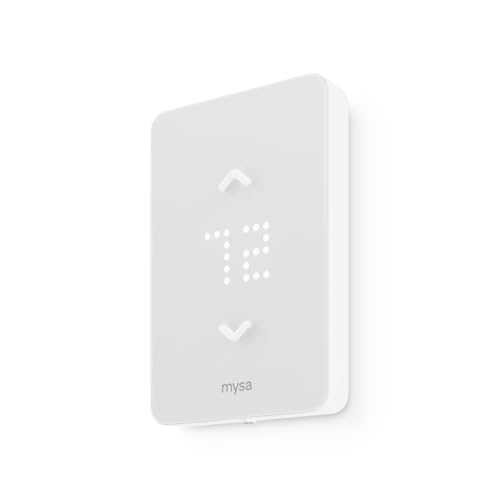 TOP CHOICEBest for small roomsMysa Smart Thermostat LITE for Electric Baseboard HeatersView on Amazon
- 4
 Best for in-wall heatersmeross Smart Thermostat for Electric Baseboard and in-Wall HeatersView on Amazon
- 5
 Best for whole-home voice controlecobee Smart Thermostat EssentialView on Amazon
- 6
 Best for simple DIY installsSensi Smart Thermostat, ST55View on Amazon
Our Top Picks
Quick Comparison
| Product | Best for | Key feature |
|---|---|---|
| meross Matter Smart Thermostat for Electric Baseboard Heaters | Homes wanting broad smart home compatibility | Matter support with HomeKit, Alexa, Google Home and SmartThings |
| Mysa Smart Thermostat LITE for Electric Baseboard Heaters | Small rooms and single-zone baseboard heat | 7-day scheduling and energy usage tracking in the app |
| meross Smart Thermostat for Electric Baseboard and in-Wall Heaters | Mixed baseboard and in-wall heater setups | Works with 120V–240V electric heat and four-wire connections |
| ecobee Smart Thermostat Essential | Households that rely on voice assistants | Siri, Alexa and Google Assistant support |
| Sensi Smart Thermostat, ST55 | DIY installers on a tight schedule | Wi-Fi setup with Alexa integration and Energy Star certification |
| Honeywell Home 5-2 Day Programmable Thermostat | Shoppers who want scheduling without an app | 5-2 day programmable schedule for electric baseboard heaters |
meross Matter Smart Thermostat for Electric Baseboard Heaters
meross Matter Smart Thermostat for Electric Baseboard Heaters | WiFi Programmable Thermostat Works with HomeKit, Alexa, Google Home & SmartThings | 120-240V | Energy Saving | Remote Control
Best for: Homes that want one thermostat to work across several smart home ecosystems.
This model suits households that already run a mix of Apple, Amazon and Google devices and want the thermostat to fit into any of them. Its Matter support is the main reason to consider it over single-platform options.
Key specs
- Designed for 120V–240V electric baseboard heaters
- Wi-Fi connectivity with programmable scheduling
- Works with HomeKit, Alexa, Google Home and SmartThings
Pros
- Matter compatibility gives broad ecosystem coverage
- Programmable schedules help limit heating when rooms are empty
- Remote control from a phone app is straightforward
Cons
- Matter setup can take more steps than a basic Wi-Fi thermostat
- Owners with older hubs may need a firmware update first
Bottom line: A strong first choice for multi-platform homes that want to avoid being locked into one assistant.
View on AmazonMysa Smart Thermostat LITE for Electric Baseboard Heaters
Mysa Smart Thermostat LITE for Electric Baseboard Heaters | Save Up to 26% on Heating | WiFi Programmable | 7-Day Scheduling | HomeKit, Alexa, Google | 120V-240V
Best for: Small rooms and single-zone baseboard heat.
Mysa is a brand many owners associate specifically with electric baseboard control, which makes it a focused option for a single room or a small apartment. The LITE version keeps the feature set aimed at that job.
Key specs
- Designed for 120V–240V electric baseboard heaters
- 7-day programmable scheduling
- Works with HomeKit, Alexa and Google
Pros
- Built around electric baseboard heat rather than general HVAC
- 7-day scheduling covers weekday and weekend routines
- App shows heating activity, useful for spotting wasted runtime
Cons
- Single-zone focus means it is less suited to whole-home control
- Some owners find the app’s advanced settings take time to learn
Bottom line: Best for someone upgrading one or two baseboard heaters who wants a dedicated product.
View on Amazonmeross Smart Thermostat for Electric Baseboard and in-Wall Heaters
meross Smart Thermostat for Electric Baseboard and in-Wall Heaters Work with HomeKit, Alexa and Google Home, 120V-240V Wi-Fi Programmable Thermostat with Easy Install, Energy Saving, 4 Wires Needed
Best for: Mixed setups with both baseboard and in-wall electric heaters.
This model is named for both heater types, so it fits homes where different rooms use different electric heat products. Confirm your heater’s wiring before buying, since this listing specifies four wires.
Key specs
- 120V–240V rating for baseboard and in-wall electric heaters
- Wi-Fi programmable thermostat
- Works with HomeKit, Alexa and Google Home
Pros
- Covers both baseboard and in-wall heater types
- Voice assistant support is listed for common platforms
- Scheduling helps reduce heating in unused rooms
Cons
- Requires four wires, which older wiring may not include
- Installation is more involved than plug-in or low-voltage models
Bottom line: A good match for homes with several heater types who have confirmed the wiring is in place.
View on Amazonecobee Smart Thermostat Essential
ecobee Smart Thermostat Essential – WiFi Thermostat, Energy Star Certified | Programmable Wi-Fi Thermostat – Works with Siri, Alexa, and Google Assistant. energy saving thermostat.
Best for: Households that rely on voice assistants for daily control.
ecobee is a well-known brand in the smart thermostat category, and the Essential model is positioned as its simpler option. Owners of high voltage systems should verify the listing’s voltage compatibility before purchase, since ecobee’s core lineup is primarily built for low voltage HVAC.
Key specs
- Wi-Fi connectivity with programmable scheduling
- Works with Siri, Alexa and Google Assistant
- Energy Star certified
Pros
- Strong voice assistant support across three platforms
- Energy Star certification signals efficiency focus
- Well-established brand with a large owner base
Cons
- Voltage compatibility with baseboard heat must be confirmed carefully
- Feature set is leaner than premium ecobee models
Bottom line: Worth considering if you confirm the model works with your electric heat and voice control is a priority.
View on AmazonSensi Smart Thermostat, ST55
Sensi Smart Thermostat, Wi-Fi, DIY, Alexa, Energy Star Certified, ST55
Best for: DIY installers who want a relatively simple setup.
Sensi is marketed as a do-it-yourself thermostat, and its setup process is one of the main reasons owners recommend it. Check the listing’s voltage specification against your heater before installing, since Sensi’s standard models are generally designed for low voltage systems.
Key specs
- Wi-Fi connectivity with Alexa integration
- Energy Star certified
- Designed for do-it-yourself installation
Pros
- Setup is designed to be approachable for DIY installers
- Alexa integration is straightforward
- Energy Star certification
Cons
- Voltage compatibility with line voltage heat needs close checking
- Fewer advanced scheduling options than some competitors
Bottom line: A reasonable pick for DIY installers, provided the voltage rating matches the heater they are controlling.
View on AmazonHoneywell Home 5-2 Day Programmable Thermostat for Electric Baseboard Heaters
Honeywell Home 5-2 Day Programmable Thermostat Electric Baseboard Heaters | RLV4305A1000
Best for: Shoppers who want scheduling without smart home connectivity.
This is a non-connected programmable thermostat rather than a smart model, which means no app or voice control. It fits households that want predictable schedules and do not need remote access.
Key specs
- Designed for electric baseboard heaters
- 5-2 day programmable schedule (weekdays and weekend)
- Model RLV4305A1000
Pros
- No app or account needed to operate
- Schedule structure is easy to understand
- Honeywell is a long-established name in heating controls
Cons
- No smart home integration or remote control
- Scheduling is less flexible than app-based models
Bottom line: A practical choice for anyone who wants a basic programmable thermostat for electric heat.
View on AmazonBuying Guide
Confirm the voltage rating
Check your heater’s nameplate for its voltage. Line voltage heaters commonly run on 120V or 240V, and a thermostat must be rated for that range. Using a low voltage thermostat on line voltage wiring can damage the controller and create a hazard.
Good picks for this: meross Matter Smart Thermostat for Electric Baseboard Heaters, Mysa Smart Thermostat LITE for Electric Baseboard Heaters
Check the wiring
Many line voltage smart thermostats require four wires, including a neutral. Older homes often have only two conductors at the heater. Open the wall plate and count the wires before you order, and consult a licensed electrician if the wiring is unclear.
Good picks for this: meross Smart Thermostat for Electric Baseboard and in-Wall Heaters, Honeywell Home 5-2 Day Programmable Thermostat
Match the heater type
Baseboard heaters and in-wall heaters are often controlled differently. Some thermostats are named for one type specifically. Matching the thermostat to your heater avoids incompatibility surprises after installation.
Good picks for this: meross Smart Thermostat for Electric Baseboard and in-Wall Heaters, Mysa Smart Thermostat LITE for Electric Baseboard Heaters
Decide on smart home integration
If you use Alexa, Google Home or Apple Home, check which platforms each model supports. Matter support can make a thermostat work across more than one ecosystem, while single-platform models may have simpler setups.
Good picks for this: meross Matter Smart Thermostat for Electric Baseboard Heaters, ecobee Smart Thermostat Essential
Look at scheduling options
A 5-2 day schedule works for households with a regular routine, while 7-day scheduling allows different settings for each day. Consider how often your routine changes before choosing.
Good picks for this: Mysa Smart Thermostat LITE for Electric Baseboard Heaters, Honeywell Home 5-2 Day Programmable Thermostat
Consider installation difficulty
Some models are described as DIY-friendly, while others require more careful wiring work. If you are not comfortable working with line voltage, plan on hiring a licensed electrician, since mistakes can create shock or fire risks.
Good picks for this: Sensi Smart Thermostat, ST55, Honeywell Home 5-2 Day Programmable Thermostat
Think about support and updates
Smart thermostats rely on firmware updates and app support. Choose a brand with a clear update history and responsive support channels, since compatibility with voice assistants can change over time.
Good picks for this: ecobee Smart Thermostat Essential, Sensi Smart Thermostat, ST55
FAQ
What is a high voltage smart thermostat?
A high voltage smart thermostat is a Wi-Fi-connected thermostat designed to control line voltage heaters, typically rated 120V to 240V, such as electric baseboard or in-wall heaters. It switches the heater’s power directly rather than sending low voltage signals to a furnace controller.
Can I use a low voltage smart thermostat on baseboard heaters?
No. Low voltage thermostats are designed for furnace and heat pump controls and are not rated for line voltage. Connecting one to a baseboard heater can damage the thermostat and create a safety hazard.
How do I know if my heater is line voltage?
Check the heater’s label or nameplate for a voltage rating. Electric baseboard heaters are usually marked 120V or 240V. If the label is missing or unclear, have a licensed electrician confirm before buying a thermostat.
Do I need a neutral wire for a smart thermostat?
Many line voltage smart thermostats require a neutral wire to power their Wi-Fi electronics. Some listings specify four wires. If your wall box has only two conductors, look for a model that does not require a neutral or consult an electrician.
Can high voltage smart thermostats work with Alexa and Google Home?
Several models in this category support Alexa and Google Home, and some also support Apple HomeKit or Matter. Check each product’s listed compatibility and confirm it matches your existing smart home platform before buying.
Is professional installation necessary?
Line voltage wiring carries a real shock and fire risk. If you are not confident working with 120V or 240V circuits, or if your wiring is unclear, hire a licensed electrician. Always turn off the breaker before touching any wiring.
Conclusion
For most electric baseboard households, the meross Matter Smart Thermostat for Electric Baseboard Heaters is a broad, multi-platform choice, while the Mysa Smart Thermostat LITE for Electric Baseboard Heaters suits single-room setups. The meross Smart Thermostat for Electric Baseboard and in-Wall Heaters fits mixed heater types. The ecobee Smart Thermostat Essential and Sensi Smart Thermostat, ST55 are worth considering if voice control and DIY setup matter most, provided voltage compatibility is confirmed. The Honeywell Home 5-2 Day Programmable Thermostat is a straightforward option if you do not need smart features. In every case, confirm voltage and wiring before purchase, since those factors decide whether a model will work at all.
For more background, see Smart Electric Heat Thermostat (2026): Line Voltage vs Low Voltage Compared and Wiring a Smart Thermostat: A Step-by-Step Guide for Beginners. If you are comparing dedicated baseboard options, Smart Thermostat Baseboard Heaters: 3 Best Picks for Electric Heat (2026) covers additional models. For compatibility questions around hub platforms, see Works with Google Home Smart Thermostat: 6 Things to Check Before You Buy (2026).
Sources
- Guidance on thermostat settings and how programmable controls affect heating energy use (energy.gov)
- Electrical product safety information and recall notices relevant to heating equipment (cpsc.gov)
- Electrical safety and fire prevention standards for residential wiring (nfpa.org)
About Claire Whitaker
Claire Whitaker is part of our editorial team and reviews and edits our smart home guides, checking product details against manufacturer specifications and owner feedback.