 By Claire Whitaker
Updated November 2026
If you heat your home with electric baseboard heaters, a smart thermostat baseboard heater setup can give you room-by-room control, scheduling and phone access that a basic dial never will. Baseboard heaters draw power directly at 120V or 240V, so the thermostat you choose has to be rated for that load and wired correctly. The three models below were selected by comparing manufacturer specifications, brand reputation with smart home platforms, and the patterns owners commonly describe in their feedback. We did not install or test these units ourselves; the notes reflect published details and documented owner experiences.
Our Top Picks
Our top picks at a glance
- 1
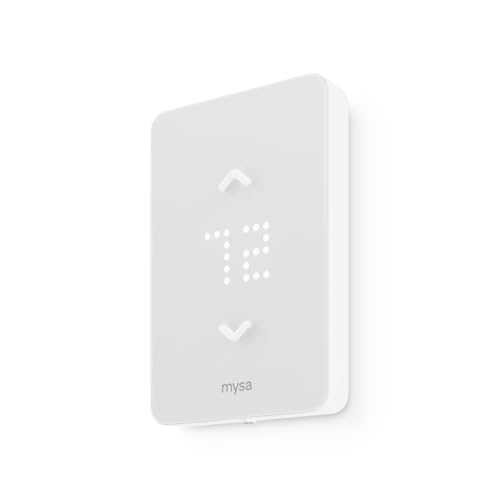 TOP CHOICEBest overallMysa Smart Thermostat LITE for Electric Baseboard HeatersView on Amazon
- 2
 Best for multi-platform homesmeross Smart Thermostat for Electric Baseboard and in-Wall HeatersView on Amazon
- 3
 Best budget pickHoneywell Home 5-2 Day Programmable Thermostat for Electric Baseboard HeatersView on Amazon
Quick Comparison
| Product | Best for | Key feature |
|---|---|---|
| Mysa Smart Thermostat LITE for Electric Baseboard Heaters | Room-by-room smart control | 7-day scheduling with Wi-Fi app control |
| meross Smart Thermostat for Electric Baseboard and in-Wall Heaters | Homes using HomeKit, Alexa and Google Home | Works with three major voice and home platforms |
| Honeywell Home 5-2 Day Programmable Thermostat (RLV4305A1000) | Simple scheduling without an app | Programmable 5-2 day schedule for baseboard heat |
Mysa Smart Thermostat LITE for Electric Baseboard Heaters
Mysa Smart Thermostat LITE for Electric Baseboard Heaters | Save Up to 26% on Heating | WiFi Programmable | 7-Day Scheduling | HomeKit, Alexa, Google | 120V-240V
Best for: Room-by-room smart control
This model suits homeowners who want app-based control of each electric heat zone and a schedule that runs without a hub. It is a strong fit for homes with several baseboard units that need separate settings. Smart Thermostats: How They Save Energy goes further into this.
Key specs
- Designed for electric baseboard heaters
- Operating voltage listed as 120V–240V
- Wi-Fi connectivity with 7-day programmable scheduling
- Works with HomeKit, Alexa and Google
Pros
- Designed specifically for baseboard heater loads, so the product category matches your heater type
- 7-day scheduling lets you set different patterns for weekdays and weekends
- Works with the three most common voice and home platforms
Cons
- Requires a stable Wi-Fi connection for remote control, and some owners report dropouts in weak signal areas
- Installation involves line-voltage wiring, so a licensed electrician is a sensible choice for many households
Bottom line: Best for homeowners who want a dedicated baseboard thermostat with app control and voice assistant support across several rooms.
View on Amazonmeross Smart Thermostat for Electric Baseboard and in-Wall Heaters
meross Smart Thermostat for Electric Baseboard and in-Wall Heaters Work with HomeKit, Alexa and Google Home, 120V-240V Wi-Fi Programmable Thermostat with Easy Install, Energy Saving, 4 Wires Needed
Best for: Homes using HomeKit, Alexa and Google Home
This option fits households that already run a mixed smart home and want the thermostat to appear in each platform without workarounds. It is also suited to in-wall heaters, not only baseboard units.
Key specs
- Designed for electric baseboard and in-wall heaters
- Operating voltage listed as 120V–240V
- Wi-Fi programmable with energy-saving scheduling
- Requires 4 wires, per the listing
Pros
- Compatible with HomeKit, Alexa and Google Home in one device
- Covers both baseboard and in-wall heater types
- The four-wire requirement is stated clearly, which helps with planning
Cons
- The four-wire requirement can be a barrier in older wiring, and you may need to open the wall box to confirm
- Owners sometimes mention that the app setup takes several attempts on the first connection
Bottom line: A good pick for mixed-platform homes that want one thermostat recognized by HomeKit, Alexa and Google, provided the wiring has four conductors.
View on AmazonHoneywell Home 5-2 Day Programmable Thermostat for Electric Baseboard Heaters
Honeywell Home 5-2 Day Programmable Thermostat Electric Baseboard Heaters | RLV4305A1000
Best for: Simple scheduling without an app
This model is for people who want a dependable programmable thermostat for electric baseboard heat without a Wi-Fi connection or a smartphone app. It suits rental units and secondary rooms where a full smart setup is not needed.
Key specs
- Designed for electric baseboard heaters
- 5-2 day programmable schedule (separate weekday and weekend periods)
- Model RLV4305A1000 as listed
Pros
- No Wi-Fi or app required, so setup is simple and there is no network dependency
- The 5-2 day schedule covers the most common household routine
- Brand recognition in electric heat controls is strong and support materials are widely available
Cons
- No remote control or voice assistant integration, so you cannot adjust it from outside the home
- Scheduling is less flexible than seven-day programs, which may frustrate households with irregular hours
Bottom line: The right choice when you want a straightforward programmable baseboard thermostat and do not need smart features.
View on AmazonBuying Guide
Confirm the heater voltage and load rating
Electric baseboard heaters commonly run on 120V or 240V, and the thermostat must match. Check the nameplate on the heater and the thermostat’s stated voltage range before buying. Also confirm that the load rating covers the total wattage on that circuit, since a smart thermostat controls the heater directly.
Good picks for this: Mysa Smart Thermostat LITE, meross Smart Thermostat
Check whether your wiring has a neutral or four conductors
Many smart baseboard thermostats need extra conductors beyond the basic two-wire heater connection. Some models list a four-wire requirement. Open the wall box with the power off and count the conductors before you order, because a missing wire is one of the most common reasons for returns.
Good picks for this: meross Smart Thermostat, Honeywell Home 5-2 Day Programmable Thermostat
Decide between app control and standalone scheduling
App-based models let you adjust temperatures from anywhere and receive schedule changes without touching the wall unit. Standalone programmable models avoid Wi-Fi dependency and privacy concerns. Consider how often you travel, whether anyone in the home relies on remote access, and how your Wi-Fi signal reaches the wall.
Good picks for this: Mysa Smart Thermostat LITE, Honeywell Home 5-2 Day Programmable Thermostat
Match the platform to your existing smart home
If you already use Alexa, Google Home or Apple Home, confirm that the thermostat supports your platform directly. Compatibility can differ between voice assistant features, so review the listed integrations carefully. Platform support matters more than brand name alone.
Good picks for this: meross Smart Thermostat, Mysa Smart Thermostat LITE
Consider scheduling flexibility
A 5-2 day schedule works for many households, while seven-day scheduling suits people with variable routines, shift work or several occupied rooms. Think about how many setback periods you want each day and whether you need to override the schedule quickly.
Good picks for this: Mysa Smart Thermostat LITE, Honeywell Home 5-2 Day Programmable Thermostat
Plan for Wi-Fi coverage at the install location
Baseboard thermostats are mounted on walls that may be far from the router. Test your signal strength with a phone at the exact spot before installing. Weak signal is a frequent complaint in owner feedback for Wi-Fi thermostats, so a mesh node or relocated router may be necessary.
Good picks for this: Mysa Smart Thermostat LITE, meross Smart Thermostat
Factor in installation and electrical safety
Because baseboard heaters use line voltage, installation carries real electrical risk. Turn off the breaker, verify the circuit is dead, and follow the manufacturer’s wiring diagram. If you are unsure, hire a licensed electrician. Consult a professional before working on any line-voltage wiring.
Good picks for this: Honeywell Home 5-2 Day Programmable Thermostat, meross Smart Thermostat
FAQ
Can any smart thermostat control an electric baseboard heater?
No. Standard low-voltage smart thermostats are built for furnaces and heat pumps. Electric baseboard heaters need a thermostat rated for line voltage, such as the Mysa, meross and Honeywell models listed above. Always confirm the voltage and load rating before buying.
Do smart baseboard thermostats need a C-wire?
Line-voltage baseboard thermostats generally do not use a C-wire in the way low-voltage HVAC thermostats do. Some models instead require additional conductors, so check the listing and your wall wiring. For general C-wire questions, see Smart Thermostat Compatibility: C-Wires and HVAC Systems.
Will a smart thermostat lower my heating bill?
Savings depend on your schedule, insulation and how you use setbacks. Manufacturers often cite potential reductions, but results vary. For a balanced view of savings claims, read Smart Thermostats: Learning vs Scheduling, Remote Sensors and Savings Claims.
Do I need a hub for these thermostats?
The models here connect directly over Wi-Fi and do not require a separate hub, according to their listings. Standalone programmable options need no network at all.
Can I control several baseboard heaters with one thermostat?
Each baseboard unit usually needs its own thermostat because each one is wired to its own circuit and controls its own heating element. Plan one device per heater or per zone.
Is professional installation necessary?
Many people with electrical experience install these units themselves, but line-voltage work carries shock and fire risk. Consult a licensed electrician, especially if you are unsure about wire identification or circuit capacity.
How do I know which platform my thermostat supports?
Check the product listing and the manufacturer’s compatibility list for HomeKit, Alexa and Google Home. For a broader overview, see What Devices Does Alexa Work With? Compatible Smart Home List (2026).
Conclusion
For most electric baseboard setups, the Mysa Smart Thermostat LITE offers a balanced mix of app control, scheduling and voice assistant support. The meross model is the better fit when HomeKit, Alexa and Google Home all need to work together and your wiring includes four conductors. The Honeywell programmable unit suits households that want reliable scheduling without Wi-Fi. Match your choice to your wiring, your platform and how much remote control you actually need. For more background, see 3 Best Smart Thermostat Baseboard Heat Options for Electric Heaters (2026) and 5 Best Mysa Smart Thermostats for Electric Baseboard Heating (2026): Our Picks.
Sources
- Guidance on thermostat settings, scheduling and home heating efficiency (energy.gov)
- Electrical and heating appliance safety information and recall notices (cpsc.gov)
- Electrical safety and fire prevention standards for home wiring (nfpa.org)
Related reading
- Sensi Touch 2 Smart Thermostat: 5 Best Models Compared (2026)
- How to Install a Smart Thermostat (and Check Compatibility First)
About Claire Whitaker
Claire Whitaker is part of our editorial team and reviews and edits our smart home guides, checking product details against manufacturer specifications and owner feedback.