
 By Claire Whitaker
Updated November 2026
Choosing a smart thermostat radiator valve comes down to three things: whether it fits your radiators, which wireless standard your home already uses, and whether it works with the voice assistant or hub you rely on. This list compares six models on those points, using manufacturer specifications, brand reputation, and the patterns owners tend to describe in their feedback. Pricing is left out on purpose, since it changes often and varies by seller. Where a spec is not clearly stated in the listing, we have left it out rather than guess.
Our top picks at a glance
- 1
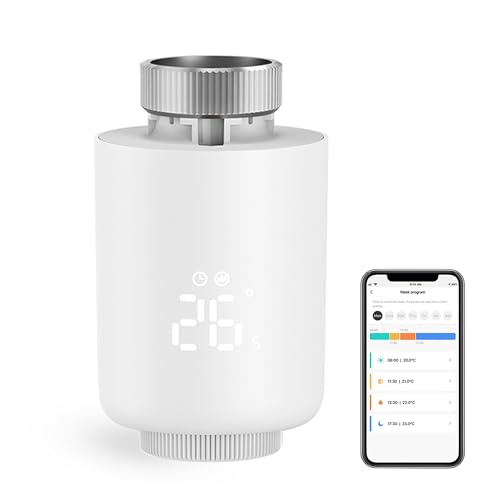 TOP CHOICEBest overallSmart Thermostat Radiator Valve: Programmable Thermostatic Valve, Zigbee ThermostatView on Amazon
- 2
 TOP CHOICEBest for multi-platform smart homesShelly Blu TRV & Blu Gateway Gen3 Smart Thermostatic ValveView on Amazon
- 3
 TOP CHOICEBest for mechanical radiator valvesDanfoss Aveo Radiator Valve Mounted Thermostatic OperatorView on Amazon
- 4
 Best for Tuya-based setupsSPYMINNPOO Smart Radiator Thermostat Valve Wireless Control for ZigBeeView on Amazon
- 5
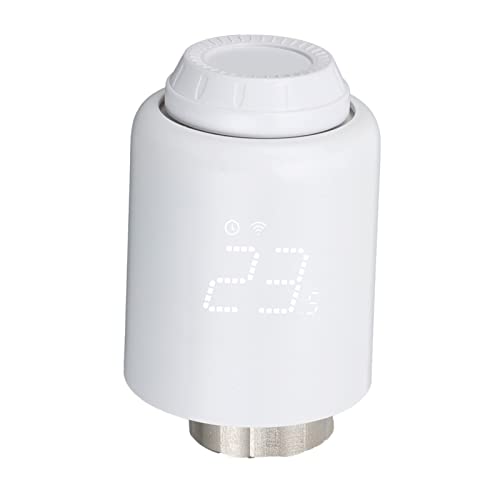 Best for Wi-Fi control without a hubNachukan Smart Radiator Valve WiFi Thermostatic Radiator Valve ControllerView on Amazon
- 6
 Best budget pickSmart Radiator Valve Thermostat Controller Wireless WiFi App ControlView on Amazon
Our Top Picks
| Product | Best for | Key feature |
|---|---|---|
| Smart Thermostat Radiator Valve (Zigbee, White) | Zigbee smart homes | Programmable schedules with app control |
| Shelly Blu TRV & Blu Gateway Gen3 | Mixed-ecosystem homes | Bluetooth control with a gateway for remote access |
| Danfoss Aveo Radiator Valve Operator | Existing Danfoss RA valves | Gas-filled sensor for precise temperature control |
| SPYMINNPOO Smart Radiator Thermostat Valve | Tuya app users | Zigbee wireless control via the Tuya app |
| Nachukan Smart Radiator Valve WiFi Controller | Wi-Fi-only setups | Built-in timing function over Wi-Fi |
| Smart Radiator Valve Thermostat Controller (WiFi) | Simple scheduling | Programmable timing with easy installation |
Smart Thermostat Radiator Valve: Programmable Thermostatic Valve, Zigbee Thermostat
Smart Thermostat Radiator Valve: Programmable Thermostatic Valve, Zigbee Thermostat for Temperature Adjustment, App Control, Tuya Zigbee Hub Required, Compatible with Alexa, Google Home (White) For another angle, check out Smart Thermostats: How They Save Energy.
Best for: Zigbee-based smart homes that want per-room scheduling from one app.
This model suits homeowners who already run a Zigbee hub and want each radiator on its own schedule. It is a good fit if you plan to group valves by room and control them with voice commands through a connected assistant.
Key specs
- Wireless protocol: Zigbee (requires a Tuya Zigbee hub, per the listing)
- Compatible assistants: Alexa and Google Home, per the listing
- Control: programmable temperature adjustment through an app
Pros
- Clear fit for Zigbee users who want room-by-room control
- Programmable schedules reduce manual adjustment
- Works with common voice assistants
Cons
- A separate Zigbee hub is required, which adds setup steps
- Not suited to homes without a Zigbee ecosystem
Bottom line: The best overall pick for homeowners already committed to Zigbee who want a straightforward programmable valve.
View on AmazonShelly Blu TRV & Blu Gateway Gen3 Smart Thermostatic Valve
Shelly Blu TRV & Blu Gateway Gen3 Smart Thermostatic Valve | Bluetooth-Operated, Radiator, Temperature Control, Home Automation, Compatible with Alexa, Google, Home Assistant
Best for: Mixed-ecosystem homes that want Bluetooth control and optional remote access.
This option works well for households that use several smart home platforms, including Home Assistant. The Bluetooth valve pairs with a gateway, which is the piece that enables remote control and broader integration.
Key specs
- Wireless protocol: Bluetooth for the valve, with a Gen3 gateway
- Compatible platforms, per the listing: Alexa, Google, Home Assistant
Pros
- Broad compatibility with major assistants and Home Assistant
- Gateway enables control away from home
- Suits radiator-by-radiator automation
Cons
- Requires the gateway for full remote functionality, adding a purchase
- Bluetooth range may be limited compared with mesh wireless standards
Bottom line: Ideal for users who want flexibility across platforms and are comfortable with a gateway.
View on AmazonDanfoss Aveo Radiator Valve Mounted Thermostatic Operator
Danfoss Aveo™ Radiator Valve Mounted Thermostatic Operator with Built-In Dial for Danfoss RA valves | Gas-filled for Precise Temperature Control
Best for: Homes with existing Danfoss RA valves that want to keep their current hardware.
This is a thermostatic operator rather than a networked smart valve. It is a sound choice when the goal is precise, self-regulating temperature control on a radiator without adding wireless infrastructure.
Key specs
- Type: mechanical thermostatic operator with built-in dial
- Fits Danfoss RA valve bodies, per the listing
- Sensor: gas-filled element for temperature response
Pros
- No wireless hub or Wi-Fi needed
- Self-regulating operation is simple to understand
- Built-in dial allows manual adjustment at the radiator
Cons
- Not app-controlled or scheduled, so it does not count as a smart device
- Limited to Danfoss RA-compatible valve bodies
Bottom line: A dependable non-smart upgrade for Danfoss owners, not a fit for those who want app or voice control.
View on AmazonSPYMINNPOO Smart Radiator Thermostat Valve Wireless Control for ZigBee
SPYMINNPOO Smart Radiator Thermostat Valve Wireless Control for ZigBee Home Heating for Tuya App Remote – for Residential Buildings and Hotels – ABS Material (White)
Best for: Users who want Zigbee control through the Tuya app.
This valve targets residential buildings and hotels as well as homes. It is a practical choice for households already using Tuya-branded devices, since the app is the main control point.
Key specs
- Wireless control: Zigbee, per the listing
- App: Tuya, per the listing
- Material: ABS body, per the listing
Pros
- Works with the widely used Tuya app ecosystem
- Zigbee control suits low-power wireless operation
- Suitable for multi-room or multi-unit setups
Cons
- Requires a Zigbee gateway, which must be sourced separately
- Brand recognition is less established than some competitors
Bottom line: A solid choice for Tuya-app users who already have, or plan to add, a Zigbee gateway.
View on AmazonNachukan Smart Radiator Valve WiFi Thermostatic Radiator Valve Controller
Nachukan Smart Radiator Valve – WiFi Thermostatic Radiator Valve Controller with Timing Function, Wireless Thermostat for Temperature Control of Home Heating System
Best for: Wi-Fi-only homes that want timed control without a separate hub.
Because it connects over Wi-Fi, this model avoids the need for a dedicated gateway. It suits homes with reliable router coverage near the radiators.
Key specs
- Wireless protocol: Wi-Fi, per the listing
- Function: timing control for heating schedules
Pros
- No separate hub required
- Timing function supports daily heating routines
- Straightforward for Wi-Fi-only households
Cons
- Performance depends on Wi-Fi signal strength at each radiator
- Fewer integration details are listed than for Zigbee or Bluetooth models
Bottom line: Best for households with strong Wi-Fi who want to skip hub purchases.
View on AmazonSmart Radiator Valve Thermostat Controller Wireless WiFi App Control
Smart Radiator Valve Thermostat Controller Wireless WiFi APP Control Programmable Timing Function Easy Installation for Home Heating System
Best for: Simple programmable heating on a limited budget.
This is a budget-oriented option for users who mainly want scheduling and app control without advanced integrations.
Key specs
- Wireless protocol: Wi-Fi, per the listing
- Function: programmable timing with app control
Pros
- Easy setup for basic scheduling
- No hub needed
- Covers the core smart valve functions
Cons
- Limited integration information compared with premium options
- Less suited to complex multi-platform automations
Bottom line: A practical budget pick for simple, app-based scheduling.
View on AmazonBuying Guide
Wireless protocol: Zigbee, Bluetooth or Wi-Fi
The protocol decides what hub or gateway you need. Zigbee valves usually depend on a hub, Bluetooth valves often need a gateway for remote access, and Wi-Fi valves connect directly to your router. Check your existing ecosystem before buying.
Good picks for this: Smart Thermostat Radiator Valve Zigbee, Nachukan Smart Radiator Valve WiFi
Radiator valve compatibility
Many smart valves replace or sit on top of a standard thread, commonly M30 x 1.5 in Europe. Confirm your valve type before ordering, and check whether the operator fits your existing body.
Good picks for this: Danfoss Aveo Radiator Valve Operator, Shelly Blu TRV
Voice assistant and platform support
If you rely on Alexa or Google Home, confirm the listing names your assistant. Platforms like Home Assistant can extend control further for users who want local automations.
Good picks for this: Shelly Blu TRV, Smart Thermostat Radiator Valve Zigbee
Scheduling and programmability
Look for timed or programmable schedules so each room heats only when occupied. Scheduling is one of the main ways smart valves reduce wasted heat over the day.
Good picks for this: Smart Radiator Valve Thermostat Controller, Nachukan Smart Radiator Valve WiFi
Use case: single room or whole home
For one or two radiators, a budget Wi-Fi model may be enough. For a full home with many zones, consider a platform that supports grouping and automation across devices.
Good picks for this: SPYMINNPOO Smart Radiator Thermostat Valve, Shelly Blu TRV
Durability and materials
Check the body material and the seal quality. ABS plastic is common in valve housings. Read the listing for stated materials rather than assuming durability.
Good picks for this: SPYMINNPOO Smart Radiator Thermostat Valve, Danfoss Aveo Radiator Valve Operator
Installation and care
Bleed radiators before installing a new valve, and keep the valve clear of dust and debris. Periodically check batteries if the model uses them, and replace seals if you notice leaks.
Good picks for this: Smart Radiator Valve Thermostat Controller, Danfoss Aveo Radiator Valve Operator
FAQ
What is a smart thermostat radiator valve?
It is a valve that controls the flow of hot water into a radiator and adjusts it based on a temperature setting or schedule, often through an app or voice assistant.
Do I need a hub for a smart radiator valve?
It depends on the protocol. Zigbee valves typically need a Zigbee hub, Bluetooth valves may need a gateway for remote control, and Wi-Fi valves connect directly to your router.
Will a smart valve work with Alexa or Google Home?
Several models list compatibility with both assistants, but always confirm the listing before buying and check that your hub supports the same ecosystem.
Can I install a smart radiator valve myself?
Many models are designed for DIY installation, but you should confirm your valve thread and body type first. If you are unsure about plumbing, consult a licensed heating professional.
Do smart radiator valves save energy?
Scheduling and room-by-room control can reduce unnecessary heating, but actual savings depend on your home, habits and heating system. Treat any savings figure as an estimate.
Is a mechanical thermostatic valve the same as a smart valve?
No. A mechanical operator self-regulates temperature but has no app, schedule or voice control. A smart valve adds networked control.
Conclusion
For Zigbee homes wanting programmable room control, the Zigbee-based Smart Thermostat Radiator Valve is the strongest fit. Mixed-platform households may prefer the Shelly Blu TRV with its gateway. Homes with existing Danfoss valves can keep their hardware with the Danfoss Aveo operator, while Wi-Fi-only users can choose between the Nachukan and the budget WiFi controller depending on how much scheduling they need.
Sources
- Guidance on home heating controls and how programmable settings affect energy use (energy.gov)
- Standards and technical resources on heating and building controls (ashrae.org)
- Background on wireless communication standards used in smart home devices (nist.gov)
Related reading
- Smart Thermostats: Learning vs Scheduling, Remote Sensors and Savings Claims
- Smart Thermostat Compatibility: C-Wires and HVAC Systems
- How to Install a Smart Thermostat (and Check Compatibility First)
- Works with Google Home Smart Thermostat: 6 Things to Check Before You Buy (2026)
- Wiring a Smart Thermostat: A Step-by-Step Guide for Beginners
- Will a Smart Thermostat Save Money? What Affects Your Savings (2026)
- Vivint Smart Thermostat Manual: Setup and Settings Guide (2026)
About Claire Whitaker
Claire Whitaker is part of our editorial team and reviews and edits our smart home guides, checking product details against manufacturer specifications and owner feedback.



