By Claire Whitaker
Updated November 2026
If you are looking for a mysa smart thermostat for electric baseboard heaters, the main job is controlling a heater that runs directly on line voltage, usually 120V or 240V, without a separate furnace or low-voltage control circuit. That changes what you can buy. Not every smart thermostat is rated for this load, and some that are rated still need a specific number of wires at the heater. The picks below were chosen by checking manufacturer specifications, brand reputation for electric heat, and the patterns owners tend to describe when they discuss installation and day-to-day use. Each one is a line-voltage or electric-heat-compatible unit, and each is sold on Amazon US.
Our top picks at a glance
- 1
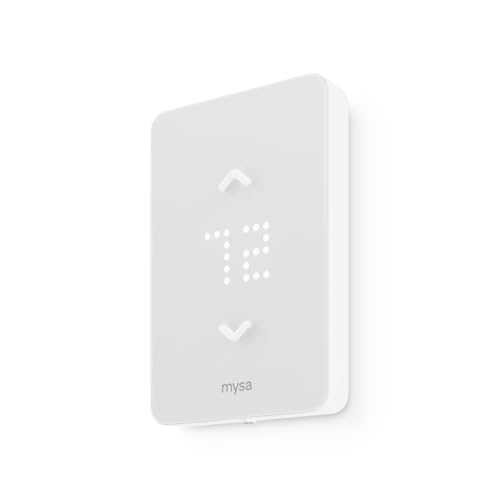 TOP CHOICEBest overallMysa Smart Thermostat LITE for Electric Baseboard HeatersView on Amazon
- 2
 TOP CHOICEBest for smart home integrationmeross Matter Smart Thermostat for Electric Baseboard HeatersView on Amazon
- 3
 TOP CHOICEBest for in-wall heatersmeross Smart Thermostat for Electric Baseboard and in-Wall HeatersView on Amazon
- 4
 Best budget pickHoneywell Home Digital Non-Programmable Thermostat for Electric Heat OnlyView on Amazon
- 5
 Best for a basic scheduleHoneywell Home 5-2 Day Programmable Thermostat for Electric Baseboard HeatersView on Amazon
Our Top Picks
| Product | Best for | Key feature |
|---|---|---|
| Mysa Smart Thermostat LITE for Electric Baseboard Heaters | Most electric baseboard setups | Wi-Fi with 7-day scheduling |
| meross Matter Smart Thermostat for Electric Baseboard Heaters | Mixed smart home ecosystems | Matter support with HomeKit, Alexa, Google Home and SmartThings |
| meross Smart Thermostat for Electric Baseboard and in-Wall Heaters | Heaters that are wall-mounted or in-wall | Wi-Fi programmable, 120V–240V range |
| Honeywell Home Digital Non-Programmable Thermostat for Electric Heat Only | Simple manual control | Digital display, no programming required |
| Honeywell Home 5-2 Day Programmable Thermostat for Electric Baseboard Heaters | Weekday and weekend schedules without Wi-Fi | 5-2 day programming |
Mysa Smart Thermostat LITE for Electric Baseboard Heaters
Mysa Smart Thermostat LITE for Electric Baseboard Heaters | Save Up to 26% on Heating | WiFi Programmable | 7-Day Scheduling | HomeKit, Alexa, Google | 120V-240V
Best for: Most homes with electric baseboard heat that want app control and scheduling
This is the most direct match for someone searching for a Wi-Fi thermostat built around baseboard heaters. It suits renters and homeowners who want to control several rooms from a phone and set a weekly schedule without installing a furnace-style controller.
Key specs
- Designed for 120V–240V electric baseboard heaters
- Wi-Fi connectivity with a companion app
- 7-day programmable scheduling
- Works with HomeKit, Alexa and Google Home
Pros
- Scheduling and app control are straightforward for electric heat
- Works with the three major voice and home ecosystems
- Designed specifically for line-voltage baseboard loads
Cons
- Requires reliable Wi-Fi in the room where it is mounted
- Energy savings depend on how you use the schedule; the manufacturer’s savings claim is not a guarantee
Bottom line: A strong first choice for most electric baseboard setups that need app and voice control. Check that your heater’s wattage fits the unit’s rating before buying.
View on Amazonmeross Matter Smart Thermostat for Electric Baseboard Heaters
meross Matter Smart Thermostat for Electric Baseboard Heaters | WiFi Programmable Thermostat Works with HomeKit, Alexa, Google Home & SmartThings | 120-240V | Energy Saving | Remote Control
Best for: Households using several smart home platforms
This model is aimed at people who already run a mix of Apple, Amazon, Google and Samsung devices. Matter support is the main reason to consider it, since it is designed to share one setup across ecosystems.
Key specs
- Designed for electric baseboard heaters, 120–240V
- Wi-Fi programmable with remote control
- Matter-compatible, with HomeKit, Alexa, Google Home and SmartThings listed
Pros
- Broad compatibility across major platforms
- Remote control from the app when away from home
- Designed with energy saving as a stated feature
Cons
- Matter setup can take more steps than a single-platform app
- Some owners report that features differ slightly between ecosystems
Bottom line: Best for people who want one thermostat working across several hubs. If you use only one ecosystem, a simpler model may be enough.
View on Amazonmeross Smart Thermostat for Electric Baseboard and in-Wall Heaters
meross Smart Thermostat for Electric Baseboard and in-Wall Heaters Work with HomeKit, Alexa and Google Home, 120V-240V Wi-Fi Programmable Thermostat with Easy Install, Energy Saving, 4 Wires Needed
Best for: Electric baseboard or in-wall heaters that need Wi-Fi control
This unit is listed for both baseboard and in-wall electric heaters, which makes it useful for rooms with a mix of heater types. It is a good fit for people who want voice control and scheduling for multiple heaters.
Key specs
- Rated for 120V–240V electric baseboard and in-wall heaters
- Wi-Fi programmable with a companion app
- Works with HomeKit, Alexa and Google Home
- Listing notes that 4 wires are needed for installation
Pros
- Covers both baseboard and in-wall heater types
- Voice assistant and app support
- Scheduling for energy-conscious use
Cons
- The 4-wire requirement may rule it out in older wiring
- Installation is more involved than plug-in or non-Wi-Fi models
Bottom line: A good pick when you have in-wall heaters or a mixed setup and can confirm four wires are present at the heater.
View on AmazonHoneywell Home Digital Non-Programmable Thermostat for Electric Heat Only
Honeywell Home Digital Non-Programmable Thermostat for Electric Heat Only | RLV3120A1005
Best for: People who want simple manual temperature control with no Wi-Fi
This is a basic digital thermostat for electric heat. It does not connect to a smart home platform, so it suits a room where you adjust the temperature by hand and don’t need schedules or remote access.
Key specs
- Designed for electric heat only
- Non-programmable digital control
- No Wi-Fi or smart home connectivity
Pros
- Simple to operate with no app setup
- Lower complexity for a single room
- Honeywell has a long history in heating controls
Cons
- No scheduling or remote control
- Does not work with Alexa, Google or HomeKit
Bottom line: The right choice if you want a basic electric heat thermostat and do not need smart features.
View on AmazonHoneywell Home 5-2 Day Programmable Thermostat for Electric Baseboard Heaters
Honeywell Home 5-2 Day Programmable Thermostat Electric Baseboard Heaters | RLV4305A1000
Best for: Households that want a weekday and weekend schedule without Wi-Fi
This model offers programming without a smart home connection. It fits a home where the same heating pattern repeats each week and the owner prefers a local control panel.
Key specs
- Designed for electric baseboard heaters
- 5-2 day programming (separate weekday and weekend schedules)
- No Wi-Fi or voice assistant integration
Pros
- Scheduling without needing an app or internet connection
- Separate weekday and weekend programs
- Straightforward local controls
Cons
- Cannot be controlled remotely or by voice
- Programming is less flexible than a 7-day app schedule
Bottom line: A practical middle option for people who want scheduled heat without smart home features.
View on AmazonBuying Guide
Confirm your heater’s voltage and wattage
Electric baseboard heaters commonly run on 120V or 240V. Check the label on the heater or your breaker panel before buying. Make sure the thermostat’s rated range covers your heater, and confirm the maximum load in amps or watts. Overloading a thermostat is a safety risk, so treat the rating as a hard limit.
Good picks for this: Mysa Smart Thermostat LITE for Electric Baseboard Heaters, meross Smart Thermostat for Electric Baseboard and in-Wall Heaters
Check wiring and the number of wires at the heater
Many smart line-voltage thermostats need a neutral or additional conductor at the heater box. Some listings mention four wires. Open the existing heater box and count the conductors before ordering. If you have only two wires, a model that requires four will not install without rewiring, which should be done by a licensed electrician.
Good picks for this: meross Smart Thermostat for Electric Baseboard and in-Wall Heaters, Mysa Smart Thermostat LITE for Electric Baseboard Heaters
Scheduling and programming options
Think about how you actually use heat. A 7-day schedule lets you set different times for each day. A 5-2 day schedule groups weekdays and weekends. A non-programmable model holds one temperature until you change it. Schedules are most useful when the room is empty for predictable blocks of time, such as during work hours.
Good picks for this: Honeywell Home 5-2 Day Programmable Thermostat for Electric Baseboard Heaters, Mysa Smart Thermostat LITE for Electric Baseboard Heaters
Smart home ecosystem compatibility
If you use Alexa, Google Home or Apple HomeKit, confirm that the thermostat lists your platform before buying. Matter support can make it easier to mix ecosystems, but setup steps vary. Voice control of heat usually works only for the platforms the manufacturer names.
Good picks for this: meross Matter Smart Thermostat for Electric Baseboard Heaters, Mysa Smart Thermostat LITE for Electric Baseboard Heaters
Wi-Fi reliability in the installation room
Wi-Fi thermostats depend on a steady connection. Baseboard heaters are often placed on exterior walls or in rooms far from the router. Check signal strength with a phone in the spot where the thermostat will sit. Weak signal can delay commands and cause missed schedule changes.
Good picks for this: Mysa Smart Thermostat LITE for Electric Baseboard Heaters, meross Matter Smart Thermostat for Electric Baseboard Heaters
Single-room versus whole-home control
Each thermostat controls the heater it is wired to, so a home with ten baseboard heaters needs one thermostat per heater or zone. Plan the count before buying. Heaters on the same circuit may still need separate controls, so confirm your layout with the manufacturer’s wiring guidance.
Good picks for this: Honeywell Home Digital Non-Programmable Thermostat for Electric Heat Only, Honeywell Home 5-2 Day Programmable Thermostat for Electric Baseboard Heaters
Installation and ongoing care
Turn off power at the breaker before any wiring work. Keep the thermostat clear of furniture and curtains so airflow is not blocked, and avoid mounting it where direct sunlight or drafts will skew the temperature reading. Update the device firmware through its app when prompted, and keep the Wi-Fi network password current so the thermostat stays connected.
Good picks for this: meross Smart Thermostat for Electric Baseboard and in-Wall Heaters, Honeywell Home Digital Non-Programmable Thermostat for Electric Heat Only
FAQ
Can any smart thermostat control electric baseboard heaters?
No. Standard low-voltage smart thermostats are designed for furnaces and heat pumps. Electric baseboard heaters use line voltage, so you need a thermostat rated for 120V or 240V electric heat. Always check the listing for the voltage and load range.
Do I need a neutral wire for a smart baseboard thermostat?
Some models require a neutral conductor at the heater box to power their electronics. Others are designed to work without one. Open the heater box and check the wires, or ask a licensed electrician before buying.
Will a smart thermostat lower my electric bill?
Scheduling can reduce heating time when a room is unused, but savings depend on your habits, insulation and climate. Manufacturers may state savings percentages, but these are not guarantees. Consider reading our guide on whether a smart thermostat will save money.
Can I control a baseboard thermostat with Alexa or Google Home?
Only if the model lists that platform. Mysa and some meross models name Alexa and Google Home in their listings. Basic Honeywell digital units do not support voice control. Confirm the exact platform before purchasing.
Is professional installation needed?
Line-voltage wiring carries a fire and shock risk if done incorrectly. If you are not comfortable working inside a breaker panel or heater box, hire a licensed electrician. This is a safety matter, so do not guess at connections.
What is the difference between a programmable and a non-programmable thermostat?
A non-programmable thermostat holds a single temperature until you change it by hand. A programmable thermostat changes temperature on a schedule. A 5-2 day model separates weekdays and weekends, while a 7-day model lets you set each day separately.
Conclusion
For most electric baseboard setups that need app and voice control, the Mysa Smart Thermostat LITE is the most direct fit. Buyers who run several smart home platforms should look at the meross Matter model, and those with in-wall heaters should compare the meross unit built for both heater types. If you want no Wi-Fi and no smart features, the Honeywell 5-2 Day model covers scheduling, and the non-programmable Honeywell suits simple manual control. Confirm voltage, wiring and Wi-Fi coverage before you buy, and consult a licensed electrician if the wiring is unclear.
Related reading: Top 5 Mysa Smart Thermostats for Electric Baseboard Heaters Compared, Smart Thermostat Compatibility: C-Wires and HVAC Systems, Smart Electric Heat Thermostat (2026): Line Voltage vs Low Voltage Compared, Smart Thermostats: Learning vs Scheduling, Remote Sensors and Savings Claims, How to Install a Smart Thermostat (and Check Compatibility First), Will a Smart Thermostat Save Money? What Affects Your Savings (2026).
Sources
- Guidance on home heating controls, thermostat settings and energy use (energy.gov)
- Electrical and fire safety standards relevant to line-voltage heating equipment (nfpa.org)
- Background on electrical installation codes that apply to heater wiring
Before you buy: helpful guides
- Ecobee Smart Thermostat Enhanced: Setup, Wiring and Compatibility Guide
- Ecobee Smart Thermostat Essential: Setup, Wiring and Compatibility Steps
- Smart Thermostat No Common Wire: 6 Workarounds That Work (2026)
- Smart Thermostat Installation Cost: What to Expect and How to Keep It Down
- ComEd Rebate for Smart Thermostat: How to Qualify and Claim It (2026)
About Claire Whitaker
Claire Whitaker is part of our editorial team and reviews and edits our smart home guides, checking product details against manufacturer specifications and owner feedback.