By Claire Whitaker
Updated November 2026
If you are looking for a mysa smart thermostat for electric baseboard heaters v2, you are probably dealing with 120V or 240V line-voltage heat that a standard Wi-Fi thermostat cannot control directly. This list focuses on units built for that job: line-voltage switching, support for baseboard loads, scheduling and remote control, and compatibility with Apple Home, Alexa or Google Home. We weighed manufacturer specifications, brand reputation for this heater type, and the patterns owners tend to mention in feedback, such as installation difficulty and app reliability.
Our top picks at a glance
- 1
 TOP CHOICEBest overallMysa Smart Thermostat V2 for Electric Baseboard HeatersView on Amazon
- 2
 TOP CHOICEBest for Matter supportmeross Matter Smart Thermostat for Electric Baseboard HeatersView on Amazon
- 3
 TOP CHOICEBest for in-wall heater setupsmeross Smart Thermostat for Electric Baseboard and in-Wall HeatersView on Amazon
- 4
 Best for Energy Star certificationSensi Smart Thermostat ST55View on Amazon
- 5
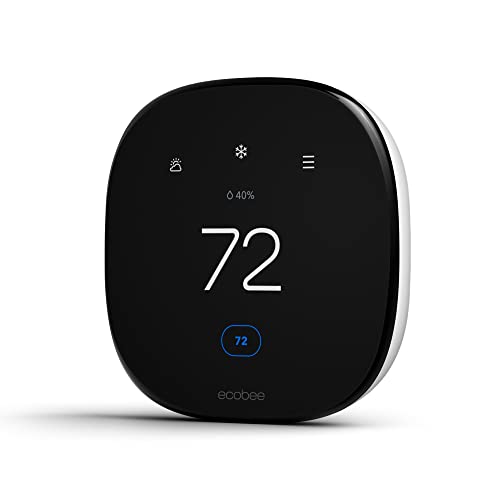 Best for whole-home comfort featuresecobee Smart Thermostat EnhancedView on Amazon
- 6
 Best budget pickHoneywell Home 5-2 Day Programmable Thermostat for Electric Baseboard HeatersView on Amazon
Our Top Picks
| Product | Best for | Key feature |
|---|---|---|
| Mysa Smart Thermostat V2 for Electric Baseboard Heaters | Most electric baseboard setups | Built for baseboard loads, no subscription needed |
| meross Matter Smart Thermostat for Electric Baseboard Heaters | Mixed smart home ecosystems | Matter support with HomeKit, Alexa, Google Home and SmartThings |
| meross Smart Thermostat for Electric Baseboard and in-Wall Heaters | Homes with in-wall heaters | Covers baseboard and in-wall electric heat |
| Sensi Smart Thermostat ST55 | Energy-focused DIY installs | Energy Star certified Wi-Fi control |
| ecobee Smart Thermostat Enhanced | Voice assistant households | Works with Siri, Alexa and Google Assistant |
| Honeywell Home 5-2 Day Programmable Thermostat | Simple scheduled heat | Non-connected 5-2 day programming |
Mysa Smart Thermostat V2 for Electric Baseboard Heaters
Mysa Smart Thermostat V2 for Electric Baseboard Heaters | No Subscription | Humidity Sensor + Touchscreen | WiFi Programmable | Scheduling | Geofencing | Apple Home, Alexa, Google | 120V-240V
Best for: Most electric baseboard setups
This is the product most directly aimed at the searcher who wants smart control of baseboard heaters without an HVAC-style installation. It suits renters and homeowners with one or several 120V-240V baseboard units who want app scheduling and geofencing.
Key specs
- Designed for 120V-240V electric baseboard heaters
- Touchscreen display with built-in humidity sensor
- Wi-Fi programmable with scheduling and geofencing
- Works with Apple Home, Alexa and Google Home
- No subscription required for core features
Pros
- Purpose-built for baseboard loads rather than central systems
- Touchscreen and humidity reading are useful at the wall
- No subscription needed for scheduling and control
Cons
- Requires a 120V-240V electric baseboard circuit, so it is not for gas or forced-air systems
- Limited to one heater per unit in typical installs, so multi-room homes need several units
Bottom line: The safest first choice for a home with electric baseboard heat that wants mainstream smart home compatibility.
View on Amazonmeross Matter Smart Thermostat for Electric Baseboard Heaters
meross Matter Smart Thermostat for Electric Baseboard Heaters | WiFi Programmable Thermostat Works with HomeKit, Alexa, Google Home & SmartThings | 120-240V | Energy Saving | Remote Control
Best for: Mixed smart home ecosystems
Best suited to households that already run a Matter-capable hub or want one device that appears across several platforms. It fits homeowners who value interoperability over a single vendor app.
Key specs
- 120-240V operation for electric baseboard heaters
- Matter standard with HomeKit, Alexa, Google Home and SmartThings support
- Wi-Fi programmable with remote control
Pros
- Matter support broadens platform choice
- Works with four major ecosystems
- Remote control from anywhere
Cons
- Matter setup can depend on your hub firmware and app versions
- Owners often recommend checking wiring and heater load before purchase
Bottom line: A strong pick if you want one thermostat that plays well across several smart home platforms.
View on Amazonmeross Smart Thermostat for Electric Baseboard and in-Wall Heaters
meross Smart Thermostat for Electric Baseboard and in-Wall Heaters Work with HomeKit, Alexa and Google Home, 120V-240V Wi-Fi Programmable Thermostat with Easy Install, Energy Saving, 4 Wires Needed
Best for: Homes with in-wall heaters
A good match for homes that mix baseboard and in-wall electric heaters and want one control type across both. It is aimed at DIY-leaning owners comfortable with a four-wire setup.
Key specs
- 120V-240V Wi-Fi programmable thermostat
- Compatible with HomeKit, Alexa and Google Home
- Energy-saving scheduling features
Pros
- Covers both baseboard and in-wall electric heat
- Voice assistant compatibility
- Energy-saving programming options
Cons
- Manufacturer specifies four wires, which many older boxes lack
- Installation is more involved than a plug-in device
Bottom line: Best for owners with mixed electric heat who have the wiring to match.
View on AmazonSensi Smart Thermostat ST55
Sensi Smart Thermostat, Wi-Fi, DIY, Alexa, Energy Star Certified, ST55
Best for: Energy-focused DIY installs
Suited to owners who prioritize an Energy Star certified device and a straightforward DIY install on a conventional system. It is less specialized for baseboard loads than the Mysa, so confirm compatibility first.
Key specs
- Wi-Fi smart thermostat
- Energy Star certified
- Alexa compatible
Pros
- Energy Star certification
- Simple DIY installation
- Alexa integration
Cons
- Designed mainly for conventional low-voltage systems, not baseboard heaters
- Electric baseboard compatibility should be verified with the manufacturer before buying
Bottom line: Worth considering only after you confirm your heater type is supported.
View on Amazonecobee Smart Thermostat Enhanced
ecobee Smart Thermostat Enhanced, Programmable Wifi Thermostat | Works with Siri, Alexa, Google Assistant – Energy Star Certified – Smart Home. Energy saving thermostat.
Best for: Voice assistant households
Best for owners who want strong voice assistant support across Siri, Alexa and Google Assistant. It fits central heating and cooling homes more than standalone baseboard setups.
Key specs
- Works with Siri, Alexa and Google Assistant
- Energy Star certified
- Programmable Wi-Fi control
Pros
- Broad voice assistant support
- Energy Star certified
- Established brand in smart thermostats
Cons
- Built primarily for central HVAC rather than electric baseboard heat
- Typically requires more wiring checks than a baseboard-specific unit
Bottom line: A good ecosystem choice, but confirm it supports your heating type before purchasing.
View on AmazonHoneywell Home 5-2 Day Programmable Thermostat for Electric Baseboard Heaters
Honeywell Home 5-2 Day Programmable Thermostat Electric Baseboard Heaters | RLV4305A1000
Best for: Simple scheduled heat
A non-connected option for buyers who want scheduled temperature control without app or hub requirements. It appeals to households that do not need remote access or voice control.
Key specs
- 5-2 day programmable schedule
- Designed for electric baseboard heaters
- Not Wi-Fi connected
Pros
- No app or internet required
- Straightforward scheduling
- Designed for baseboard heat
Cons
- No remote control or smart home integration
- No geofencing or voice assistant support
Bottom line: The right choice when you want reliable scheduling and nothing more.
View on AmazonBuying Guide
Heater Voltage and Type
Check whether your heaters run on 120V, 240V, or both. Electric baseboard heaters are usually line voltage, so a low-voltage thermostat will not control them. Confirm the rating printed on the heater label before you buy.
Good picks for this: Mysa Smart Thermostat V2 for Electric Baseboard Heaters, meross Smart Thermostat for Electric Baseboard and in-Wall Heaters
Smart Home Ecosystem
Decide whether you use Apple Home, Alexa, Google Home or a mix. Matter support can simplify multi-platform setups, but verify support in your hub and app versions.
Good picks for this: meross Matter Smart Thermostat for Electric Baseboard Heaters, ecobee Smart Thermostat Enhanced
Wiring Requirements
Many line-voltage thermostats need a neutral or four-wire connection at the heater location. Check your existing wiring before purchase. If you are unsure, a licensed electrician can confirm the setup safely.
Good picks for this: meross Smart Thermostat for Electric Baseboard and in-Wall Heaters, Mysa Smart Thermostat V2 for Electric Baseboard Heaters
Scheduling and Remote Control
Consider whether you need geofencing, app scheduling or only a basic weekly program. Connected units let you adjust temperatures from anywhere, while non-connected models are simpler and avoid network dependence.
Good picks for this: Mysa Smart Thermostat V2 for Electric Baseboard Heaters, Honeywell Home 5-2 Day Programmable Thermostat for Electric Baseboard Heaters
Energy Certification
Energy Star certification signals that a device meets efficiency criteria set by the U.S. Environmental Protection Agency and Department of Energy. Certification does not guarantee savings in every home, so treat it as one factor among several.
Good picks for this: Sensi Smart Thermostat ST55, ecobee Smart Thermostat Enhanced
Installation Difficulty
Plan for the time and tools required. Some units install in under an hour with basic tools, while others need a wiring check and possibly a licensed electrician. Turn off the breaker before any work and verify power is off with a meter.
Good picks for this: Honeywell Home 5-2 Day Programmable Thermostat for Electric Baseboard Heaters, Sensi Smart Thermostat ST55
Display and Sensors
A touchscreen and built-in humidity sensor make on-wall adjustments easier and give you environmental readings. Consider whether these features matter in your room, especially in bathrooms or basements.
Good picks for this: Mysa Smart Thermostat V2 for Electric Baseboard Heaters
FAQ
Can the Mysa smart thermostat for electric baseboard heaters v2 work with 240V heaters?
The Mysa V2 is designed for 120V-240V electric baseboard heaters, so it covers both common voltages. Still, confirm your heater’s rating and load before installation.
Do I need a subscription for basic control?
Manufacturers describe the Mysa V2 as not requiring a subscription for core scheduling and control. Check current product documentation for any optional features.
Will a standard smart thermostat work on baseboard heat?
Most low-voltage smart thermostats do not control line-voltage baseboard heaters directly. You need a thermostat rated for electric baseboard loads.
Do I need a neutral wire?
Many line-voltage thermostats require a neutral or four-wire connection. Check your wiring before buying, and consult a licensed electrician if you are unsure.
Is professional installation required?
Electrical work carries risk. If you are not comfortable working with line voltage, consult a licensed electrician.
Can I control several heaters with one thermostat?
Typically each line-voltage thermostat controls one heater circuit. Multi-room homes often need one unit per heater.
Conclusion
For most electric baseboard homes, the Mysa Smart Thermostat V2 is the most direct fit, since it is built for baseboard loads and needs no subscription. Choose the meross Matter model if platform flexibility matters most, the meross in-wall model for mixed heater types, and the Honeywell 5-2 Day unit if you want scheduling without connectivity. Always verify voltage and wiring before you buy.
Sources
- Guidance on thermostat settings and home heating efficiency (energy.gov)
- Energy Star certification criteria for smart thermostats (energystar.gov)
- Electrical safety standards and guidance for home heating equipment (nfpa.org)
Before you buy: helpful guides
- Ecobee Smart Thermostat Enhanced: Setup, Wiring and Compatibility Guide
- Ecobee Smart Thermostat Essential: Setup, Wiring and Compatibility Steps
- Smart Thermostat No Common Wire: 6 Workarounds That Work (2026)
- Smart Thermostat Installation Cost: What to Expect and How to Keep It Down
- ComEd Rebate for Smart Thermostat: How to Qualify and Claim It (2026)
Related reading
- Top 5 Mysa Smart Thermostats for Electric Baseboard Heaters Compared
- Smart Thermostat Baseboard Heating: 3 Best Mysa Picks for Electric Heat (2026)
About Claire Whitaker
Claire Whitaker is part of our editorial team and reviews and edits our smart home guides, checking product details against manufacturer specifications and owner feedback.