 By Claire Whitaker
Updated November 2026
Choosing a smart thermostat for RVs is harder than picking one for a house. Most RV furnaces and heat pumps run on low-voltage systems with fewer wires, the power source may be a 12-volt battery bank, and the space is small enough that a poorly placed sensor can throw off the whole schedule. This guide compares seven widely sold smart thermostats that owners often mention in RV and tiny-home discussions. Our selection criteria were specifications (wire count, power requirements, sensor options), brand reputation for support and firmware updates, and recurring owner feedback about installation difficulty and voice-assistant reliability. Nothing here is based on our own testing, and you should always confirm compatibility with your specific RV’s HVAC unit before buying.
Our top picks at a glance
- 1
 TOP CHOICEBest overallSensi Smart Thermostat ST55View on Amazon
- 2
 TOP CHOICEBest for simple wiringSensi Lite Smart Thermostat ST25View on Amazon
- 3
 TOP CHOICEBest for Alexa householdsAmazon Smart ThermostatView on Amazon
- 4
 Best for compact spacesGoogle Nest ThermostatView on Amazon
- 5
 Best for remote sensingecobee Smart Thermostat EnhancedView on Amazon
- 6
 Best budget pickecobee Smart Thermostat EssentialView on Amazon
- 7
 Best premium optionecobee Smart Thermostat PremiumView on Amazon
Our Top Picks
Quick Comparison
| Product | Best for | Key feature |
|---|---|---|
| Sensi Smart Thermostat ST55 | Overall RV use | Energy Star certification and Alexa support |
| Amazon Smart Thermostat | Alexa households | Works with Alexa and Ring; C-wire required |
| ecobee Smart Thermostat Essential | Budget-minded owners | Energy Star certified with voice assistant support |
| Google Nest Thermostat | Compact spaces | Small footprint and learning schedule |
| Sensi Lite Smart Thermostat ST25 | Simple wiring | Lightweight DIY setup |
| ecobee Smart Thermostat Enhanced | Remote sensing | Room sensors for temperature balancing |
| ecobee Smart Thermostat Premium | Premium features | Built-in voice assistants and air quality monitoring |
Sensi Smart Thermostat ST55
Sensi Smart Thermostat, Wi-Fi, DIY, Alexa, Energy Star Certified, ST55
Best for: Overall RV use with a DIY installation approach
This model suits RV owners who want a straightforward, Energy Star certified thermostat that works with Alexa and handles common heating and cooling setups.
Key specs
- Wi-Fi connectivity
- Designed for DIY installation
- Works with Alexa
- Energy Star certified
Pros
- Simple setup for owners comfortable with basic wiring
- Energy Star certification signals efficiency standards
- Voice control through Alexa
Cons
- Requires confirming your RV’s wire configuration before purchase
- Fewer advanced features than premium models
Bottom line: A solid default choice for most RV owners who want reliable basics and Alexa control.
View on AmazonAmazon Smart Thermostat
Amazon Smart Thermostat – Save money and energy – Works with Alexa and Ring – C-wire required
Best for: Alexa households that already use Ring or other Amazon devices
This thermostat fits owners who already run an Alexa-based smart home and want their RV climate control to sit inside that ecosystem.
Key specs
- Works with Alexa and Ring
- Requires a C-wire
Pros
- Tight integration with Alexa routines
- Designed to help reduce energy use
- Simple app and voice control
Cons
- C-wire requirement can rule it out for many RVs
- Less ecosystem flexibility if you use Google or Apple devices
Bottom line: Best for owners whose RV has a C-wire and who already rely on Alexa throughout their home or rig.
View on Amazonecobee Smart Thermostat Essential
ecobee Smart Thermostat Essential – WiFi Thermostat, Energy Star Certified | Programmable Wi-Fi Thermostat – Works with Siri, Alexa, and Google Assistant. energy saving thermostat.
Best for: Budget-minded owners who want voice assistant support
The Essential model is aimed at owners who want an Energy Star certified Wi-Fi thermostat with support for Siri, Alexa, and Google Assistant without paying for premium sensors.
Key specs
- Wi-Fi thermostat
- Energy Star certified
- Works with Siri, Alexa, and Google Assistant
Pros
- Broad voice assistant compatibility
- Energy Star certification
- Programmable scheduling for set-and-forget use
Cons
- No included remote sensors, so single-zone reading only
- Wiring still needs to be verified for RV systems
Bottom line: A good pick for owners who want ecobee’s ecosystem without the added features of higher-end models.
View on AmazonGoogle Nest Thermostat
Google Nest Thermostat – Smart Thermostat for Home – Programmable Wifi Thermostat – Snow
Best for: Compact spaces and Google Home users
The Nest Thermostat has a small footprint, which can suit the limited wall space in many RV living areas. It is a natural fit for owners already using Google Home.
Key specs
- Wi-Fi programmable thermostat
- Compact design
- Works with Google Home
Pros
- Compact size suits tight RV walls
- Learns schedules over time based on manual adjustments
- Strong Google Home integration
Cons
- Wiring requirements can be a hurdle in some RV systems
- Fewer built-in sensor options than premium competitors
Bottom line: Ideal for owners who want a sleek, small thermostat and already rely on Google devices.
View on AmazonSensi Lite Smart Thermostat ST25
Sensi Lite Smart Thermostat, WiFi, Alexa, DIY, Energy Star Certified, ST25
Best for: Simple wiring and lightweight DIY installation
The ST25 is a lighter, simpler version of the Sensi line, aimed at owners who want smart scheduling without extra features they will not use.
Key specs
- Wi-Fi connectivity
- Works with Alexa
- Energy Star certified
Pros
- Simpler, lower-complexity setup
- Energy Star certification
- Alexa voice control
Cons
- Fewer advanced features than the ST55
- Still requires checking RV wire count
Bottom line: A practical choice for owners who value straightforward operation over advanced scheduling.
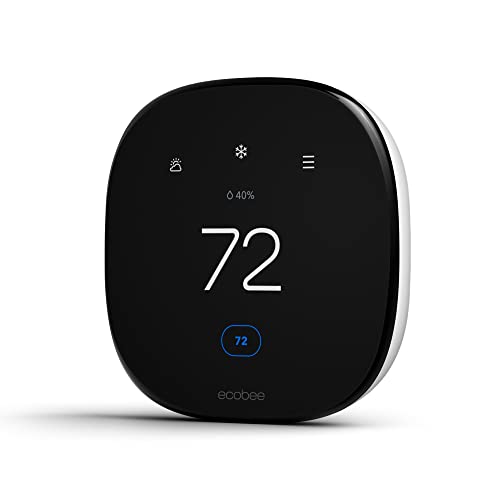
View on Amazonecobee Smart Thermostat Enhanced
ecobee Smart Thermostat Enhanced, Programmable Wifi Thermostat | Works with Siri, Alexa, Google Assistant – Energy Star Certified – Smart Home. Energy saving thermostat.
Best for: Remote sensing and temperature balancing
The Enhanced model is designed for homes where temperature differences between rooms are a problem. In an RV, it can help balance the front cab area and the living space.
Key specs
- Wi-Fi programmable thermostat
- Works with Siri, Alexa, and Google Assistant
- Energy Star certified
Pros
- Supports remote room sensors for better temperature reading
- Broad voice assistant compatibility
- Energy Star certification
Cons
- Sensors add setup time and placement decisions
- Full wiring check is still required
Bottom line: Worth considering for owners with multi-zone comfort problems in larger motorhomes or fifth wheels.
View on Amazonecobee Smart Thermostat Premium
ecobee Smart Thermostat Premium – WiFi, Siri & Alexa Built-In, Smart Sensor | Air Quality Monitor. Works with Alexa, Siri and Google Home. Live view from your ecobee Doorbell. Energy Saving thermostat
Best for: Owners who want built-in voice assistants and air quality features
The Premium model adds a built-in smart sensor and air quality monitoring on top of the standard ecobee feature set, which appeals to owners who spend extended time in their rig.
Key specs
- Built-in Alexa and Siri support
- Smart sensor included
- Air quality monitoring
- Works with Google Home
Pros
- Built-in voice assistant support
- Air quality monitoring adds a health-related data point
- Smart sensor for occupancy-aware control
Cons
- Feature set is more than many RV owners need
- Requires the same wiring verification as other models
Bottom line: For owners who want the most features in the ecobee lineup and plan to use the air quality data.
View on AmazonBuying Guide
Wire Count and the C-Wire Question
Most RV thermostats connect through a set of low-voltage wires, and many smart models need a common wire (C-wire) to stay powered. Count the wires behind your current thermostat before you buy. If your RV has no C-wire, look for models that run on batteries or use a power-stealing design, and check the manufacturer’s compatibility list first.
Good picks for this: Sensi Lite Smart Thermostat ST25, Sensi Smart Thermostat ST55
Power Source and Voltage
RVs run on 12-volt DC systems for lighting and some appliances, but most HVAC thermostats expect 24-volt AC control signals. Confirm which voltage your RV’s heating or cooling unit uses. A thermostat that is not designed for your system can fail or cause the furnace to malfunction.
Good picks for this: ecobee Smart Thermostat Essential, Google Nest Thermostat
Size and Mounting Fit
RV wall space is limited, and existing thermostats are often mounted on narrow panels near doors or cabinets. Measure the mounting area and the backplate footprint. Compact designs can suit tight areas, while larger displays may cover too much of a small wall.
Good picks for this: Google Nest Thermostat, Sensi Lite Smart Thermostat ST25
Sensors and Zone Control
Thermostats read temperature from one spot, which may not match the living area of an RV. Remote sensors can help balance temperature between the driver’s cab area and the main living space. Think about whether you need this before paying for extra sensors.
Good picks for this: ecobee Smart Thermostat Enhanced, ecobee Smart Thermostat Premium
Voice Assistant Compatibility
If you already run a voice-controlled home, match the thermostat to your assistant. Some models support Alexa only, while others work with Siri, Alexa, and Google Assistant. Check the platform list in the listing and confirm your app setup before buying.
Good picks for this: ecobee Smart Thermostat Essential, Amazon Smart Thermostat
Energy Efficiency Certification
Energy Star certification means a product meets efficiency guidelines set by a federal program. For RVs that run on limited battery or generator power, efficient control can matter. Certification alone does not guarantee savings in your specific rig, so treat it as one data point.
Good picks for this: Sensi Smart Thermostat ST55, ecobee Smart Thermostat Essential
Installation Difficulty
Some owners install smart thermostats themselves, while others prefer a technician. Review the manufacturer’s installation steps and look for a DIY design if you plan to do the work. Keep the original thermostat wiring labeled before you disconnect anything.
Good picks for this: Sensi Smart Thermostat ST55, Sensi Lite Smart Thermostat ST25
FAQ
Can a smart thermostat work in an RV without a C-wire?
Some models can, usually by using a power-stealing method or a battery. Many owners report better results with a C-wire, so check the manufacturer’s compatibility list for your exact heating and cooling unit before buying.
Do I need Wi-Fi at my campsite?
Most smart thermostats require a Wi-Fi connection for remote control and schedule changes. Campground Wi-Fi can be unreliable, so many owners use a mobile hotspot or cellular router. The thermostat should still hold its last schedule offline, but confirm this in the manual.
Can smart thermostats control a heat pump in an RV?
Some models support heat pump systems, but the wiring and control logic are different from standard furnaces. Check the compatibility list for heat pump support and confirm the terminal labels before installation.
Will a smart thermostat drain my RV battery?
Power draw depends on the model and how it is wired. Battery-powered units use their own cells, while wired models draw from the HVAC control circuit. Owners often report monitoring battery levels after installation, so check the specifications for your model.
Do I need a professional to install one?
Many smart thermostats are designed for DIY installation, but RV wiring can be less standard than home wiring. If you are unsure about voltage, wire identification, or the HVAC system, consult a qualified RV technician or licensed HVAC professional.
Can I use voice assistants with an RV thermostat?
Yes, if the model supports your assistant. Alexa, Google Assistant, and Siri compatibility varies by product, so review the listing and your app settings before you buy.
Conclusion
For most RV owners, the Sensi Smart Thermostat ST55 is a strong starting point because it balances DIY installation, Energy Star certification, and Alexa support. Choose the Amazon Smart Thermostat if your RV has a C-wire and you run an Alexa-based home. The Google Nest Thermostat suits compact spaces and Google users. The ecobee Enhanced and Premium models make sense for multi-zone comfort or built-in voice assistant needs. Always verify wiring and voltage against your specific RV before purchase, and consult a qualified technician if you are unsure.
Sources
- Federal guidance on home heating and cooling efficiency and smart thermostat settings (energy.gov)
- Energy Star certification criteria for programmable and smart thermostats (energystar.gov)
- Industry standards and guidance for recreational vehicle systems and safety
Related reading
- Top 5 Mysa Smart Thermostats for Electric Baseboard Heaters Compared
- Smart Thermostats: Learning vs Scheduling, Remote Sensors and Savings Claims
- Smart Thermostat No Common Wire: 6 Workarounds That Work (2026)
- Smart Thermostat Compatibility: C-Wires and HVAC Systems
- Smart Thermostat Baseboard Heating: 3 Best Mysa Picks for Electric Heat (2026)
- Smart Thermostat Baseboard Heaters: 3 Best Picks for Electric Heat (2026)
About Claire Whitaker
Claire Whitaker is part of our editorial team and reviews and edits our smart home guides, checking product details against manufacturer specifications and owner feedback.