 By Claire Whitaker
Updated November 2026
The honeywell t6 pro smart thermostat is a Wi-Fi programmable thermostat aimed at homeowners who want scheduling, remote control and a straightforward install without paying for a display full of extras. It fits best in homes with a standard heat pump or conventional furnace and air conditioner that match its stage count, especially where a C-wire is already present or can be added. Buyers with electric baseboard heat, mini splits, multi-zone systems that need separate sensors, or a strong preference for learning algorithms should skip it and look at models built for those setups.

Honeywell TH6320WF2003 T6 Pro Smart Thermostat programmable with up to 3 Heat/2 Cool Heat Pump or 2 Heat/2 Cool Conventional with Extended 5-Year Warranty (TH6320WF2003)
Product Overview
The Honeywell TH6320WF2003 is part of Honeywell Home’s T6 Pro line, which the company positions as its mainstream Wi-Fi programmable thermostat family. The listing name describes it as a programmable unit supporting up to three heat stages and two cool stages on heat pump systems, or two heat and two cool stages on conventional equipment. It is sold with an extended five-year warranty, which the listing highlights alongside the model number.
The unit uses a backlit touchscreen and connects to home Wi-Fi so you can change setpoints and schedules from a phone app. It is a programmable thermostat in the traditional sense: you build a weekly schedule or use hold and override settings, rather than relying on the self-learning behavior found in some competing products. That distinction matters if you expect the device to figure out your household on its own.
Because it is a Honeywell Home product, it is designed to work with the company’s ecosystem and with common voice assistants. Setup typically involves mounting a wall plate, labeling and connecting wires to the correct terminals, then pairing the thermostat to your Wi-Fi network through the app. The rest of this review looks at what the listing confirms, where the limits are, and how to decide whether it suits your system.
Key Features & Specifications
The table below lists only the specifications stated in the product name and the core features that define this model family. Check the printed box and installation manual for exact dimensions, wire requirements and operating ranges before you buy.
| Feature | What the Listing Indicates |
|---|---|
| Model number | TH6320WF2003 |
| System compatibility | Up to 3 heat / 2 cool stages (heat pump); 2 heat / 2 cool stages (conventional) |
| Connectivity | Wi-Fi, controlled through the Honeywell Home app |
| Programming | Programmable weekly schedules with manual override |
| Display | Color touchscreen with backlight |
| Warranty | Extended five-year warranty as listed |
| Voice assistant support | Works with major voice assistants through linked accounts |
| Power | Typically hardwired with a common wire (C-wire) recommended; confirm for your system |
Two points deserve extra attention. First, the stage counts are maximums, not requirements. A single-stage furnace and a single-stage air conditioner will work, but you will not use the extra stages. Second, the wiring question is the most common source of installation problems with this class of thermostat. Many homes lack a dedicated common wire, and while some installations work without one, the thermostat’s power draw depends on how the system is wired. If you have no C-wire, read the workaround options in the Buying Guide section before ordering.
Pros & Cons
Pros
- Supports multi-stage heat pump systems and conventional systems with a clear stage ceiling in the product name.
- Traditional weekly programming gives predictable control for households that prefer to set their own schedule.
- Wi-Fi app control lets you adjust temperature and schedules when you are away from home.
- Backlit color touchscreen is straightforward to read and operate.
- An extended five-year warranty is listed on the product, which is longer than many thermostats offer.
- Compatible with common voice assistants for basic temperature commands.
- Honeywell is a long-established name in residential HVAC controls, and the T6 Pro family has a large installed base.
Cons
- Not a learning thermostat; it follows the schedule you program rather than adapting automatically.
- Wiring can be a hurdle in homes without a C-wire, and some owners report needing an adapter or a new wire run.
- Does not support electric baseboard heat or line-voltage systems, so it is unsuitable for those setups.
- Remote sensor support, if you need it for room-by-room control, should be verified against the specific kit you are buying.
- Smart features depend on a Wi-Fi connection and a Honeywell Home account; outages can limit remote control.
Performance Analysis
Performance for a thermostat like this comes down to three things: how accurately it reads temperature, how reliably it runs your equipment on schedule, and how well the app and Wi-Fi link hold up day to day. Based on the specifications and the patterns that appear in owner discussions, the T6 Pro line generally handles basic scheduling and temperature holds without trouble once it is installed correctly.
Temperature control is governed mostly by the thermostat’s sensor placement and the equipment it drives. Owners commonly report that placing the unit on an interior wall away from supply vents, direct sunlight and exterior doors improves how closely the displayed temperature matches the room. Because the unit has no built-in learning, its comfort results depend on your schedule being sensible for your home. A schedule that starts heating well before you wake up will be more comfortable than one that waits until you are already cold.
Scheduling reliability is a strength of the programmable design. The thermostat does exactly what the weekly schedule says, which many households find easier to troubleshoot than a learning system that changes behavior over time. Owners who want to save energy typically use setbacks, lowering the heat overnight and while the house is empty. Manufacturers specify that actual savings vary with climate, insulation and how aggressively you set back, so any savings figure should be treated as an estimate rather than a guarantee.
Connectivity is where most day-to-day issues appear. Remote control depends on the thermostat staying connected to your router, which means a weak Wi-Fi signal in the hallway where the thermostat sits can cause delayed app updates. Homes with crowded 2.4 GHz networks, or with the thermostat on a distant access point, sometimes report intermittent disconnects. Placing a router or mesh node within reasonable range of the thermostat usually resolves this.
Voice control works for simple commands like raising or lowering the temperature, but the depth of integration varies by assistant and by how you link accounts. Treat voice support as a convenience layer, not the primary control method.
Who Should Buy This Product?
This thermostat fits a specific set of buyers well. It is a strong match for homeowners with a conventional or heat pump system that falls within the three-heat, two-cool stage range, who want programmable scheduling and app access without a learning algorithm. It also suits people who value a long warranty and a brand with a wide service footprint.
Renters and owners who plan to replace their thermostat in a few years may appreciate the straightforward install, provided they confirm wiring first. Households that already use Honeywell or a compatible voice assistant will find setup familiar.
You should skip this model if your heating is electric baseboard, if you have a line-voltage system, or if you want a thermostat that learns your habits and adjusts on its own. Multi-zone homes that need many room sensors should check remote sensor compatibility before buying, because sensor support is a separate purchase decision. Homes with no C-wire and no willingness to add one or use an adapter may also find the install frustrating.
Buying Guide
Start with compatibility. Identify your heating and cooling equipment type, count the stages if you can, and confirm your system is either a heat pump or conventional setup. Check the wire labels at your current thermostat. A wire marked C is the common wire, and its presence makes installation far simpler. If your home lacks one, you have several routes. Some owners use a dedicated C-wire adapter, while others run a new cable. A detailed walkthrough is available in Smart Thermostat No Common Wire: 6 Workarounds That Work (2026), and the broader compatibility picture is covered in Smart Thermostat Compatibility: C-Wires and HVAC Systems.
Next, decide how much you care about learning versus scheduling. If you want automatic adjustment, this model will disappoint. Smart Thermostats: Learning vs Scheduling, Remote Sensors and Savings Claims explains the trade-offs in more depth. If you want precise control and predictable behavior, a programmable model like this one is a reasonable choice.
Consider the alternatives within the same product family. The Honeywell TH6220WF2006/U Lyric T6 Pro offers a stage configuration suited to heat pump systems with up to two heat and one cool stage:
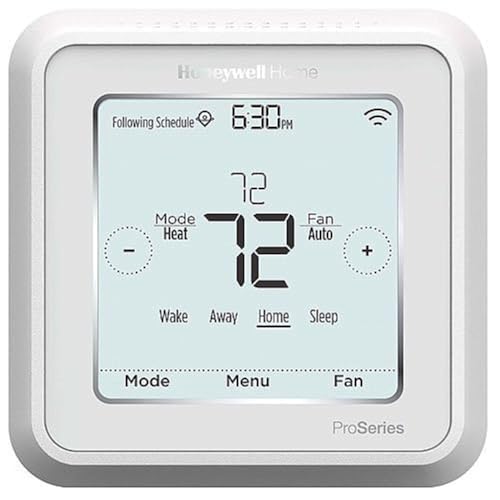
Honeywell TH6220WF2006/U Lyric T6 Pro Wi-Fi Programmable Thermostat with Stages Up to 2 Heat/1 Cool Heat Pump or 2 Heat/2 Cool Conventional
The Honeywell TH6320WF2003/U Lyric T6 Thermostat matches the same three-heat, two-cool stage range and is a useful comparison point if you want to check how the Lyric naming differs from the current listing:
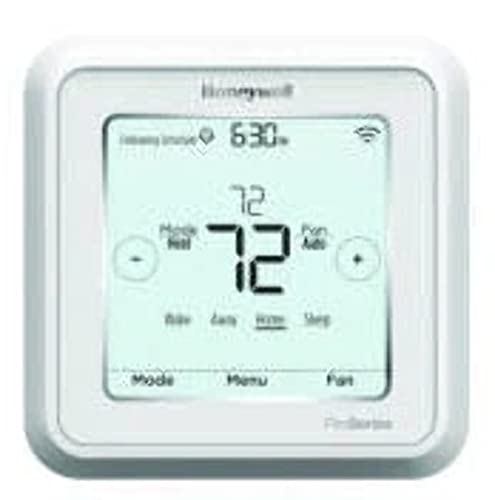
Honeywell TH6320WF2003/U Lyric T6 Thermostat, 3 Heat / 2 Cool Heat Pump Or 2 Heat / 2 Cool Conventional, 4.09" x 4.09" x 1.06"
If you are shopping beyond Honeywell, the Ecobee Smart Thermostat Essential is a widely known alternative with a different control approach. Its setup and compatibility requirements are covered in Ecobee Smart Thermostat Essential: Setup, Wiring and Compatibility Steps. For homes with electric baseboard heat, which this Honeywell model does not support, 7 Best Smart Thermostats for Electric Baseboard Heat (2026) is a better starting point.
Finally, verify the ecosystem. Confirm that your voice assistant and phone app are supported, and check whether you need remote sensors. Sensor compatibility is easy to overlook and can change which model is right for your home. For a general checklist, see How to Install a Smart Thermostat (and Check Compatibility First).
FAQ
Does the Honeywell T6 Pro need a C-wire?
Many installations work better with a C-wire, which provides a continuous power path to the thermostat. Homes without one may still install the unit using a supported workaround, but results vary by system. Check your existing wiring and the manufacturer’s installation guidance before purchase. A licensed HVAC technician can confirm what your system needs.
Is the T6 Pro a learning thermostat?
No. It is a programmable thermostat that follows the weekly schedule you set. It does not automatically learn your habits, so you will want to build a schedule that matches your routine.
Does it work with heat pumps?
Yes, the product name specifies support for heat pump systems with up to three heat and two cool stages. Confirm your heat pump’s stage configuration and any auxiliary or emergency heat settings during setup.
Can I control it from my phone when I am away?
Yes, through the Honeywell Home app, as long as the thermostat has a working Wi-Fi connection. Remote control depends on your home network staying online.
Does it support electric baseboard heaters?
No. Electric baseboard heat uses line voltage, and this thermostat is designed for low-voltage HVAC systems. Look at dedicated baseboard thermostats for that setup.
Does the warranty cover the whole unit?
The listing states an extended five-year warranty. Read the warranty terms that come with your unit for exact coverage, registration requirements and exclusions.
Can I use it with voice assistants?
Yes, it supports common voice assistants for basic temperature commands. Link your accounts in the app, and expect the feature set to vary by platform.
Is it difficult to install?
Installation is generally manageable for people comfortable with basic wiring and a screwdriver, provided the system is standard and the wires are clearly labeled. Turn off power at the breaker before touching wires, and call a professional if you are unsure.
Final Verdict
Is the Honeywell T6 Pro worth buying?
For homeowners with a compatible heat pump or conventional system and a clear preference for programmable scheduling, the honeywell t6 pro smart thermostat is a sensible, well-supported choice with a long warranty listed on the product. Its main limitations are the lack of automatic learning, the need for careful wiring checks, and its incompatibility with electric baseboard heat. Confirm your stage count, wire situation and ecosystem before you order, and it should be a dependable daily controller.
View on AmazonAbout Claire Whitaker
Claire Whitaker is part of our editorial team and reviews and edits our smart home guides, checking product details against manufacturer specifications and owner feedback.